Spring/Summer Children's Sweatshirt Design Trends
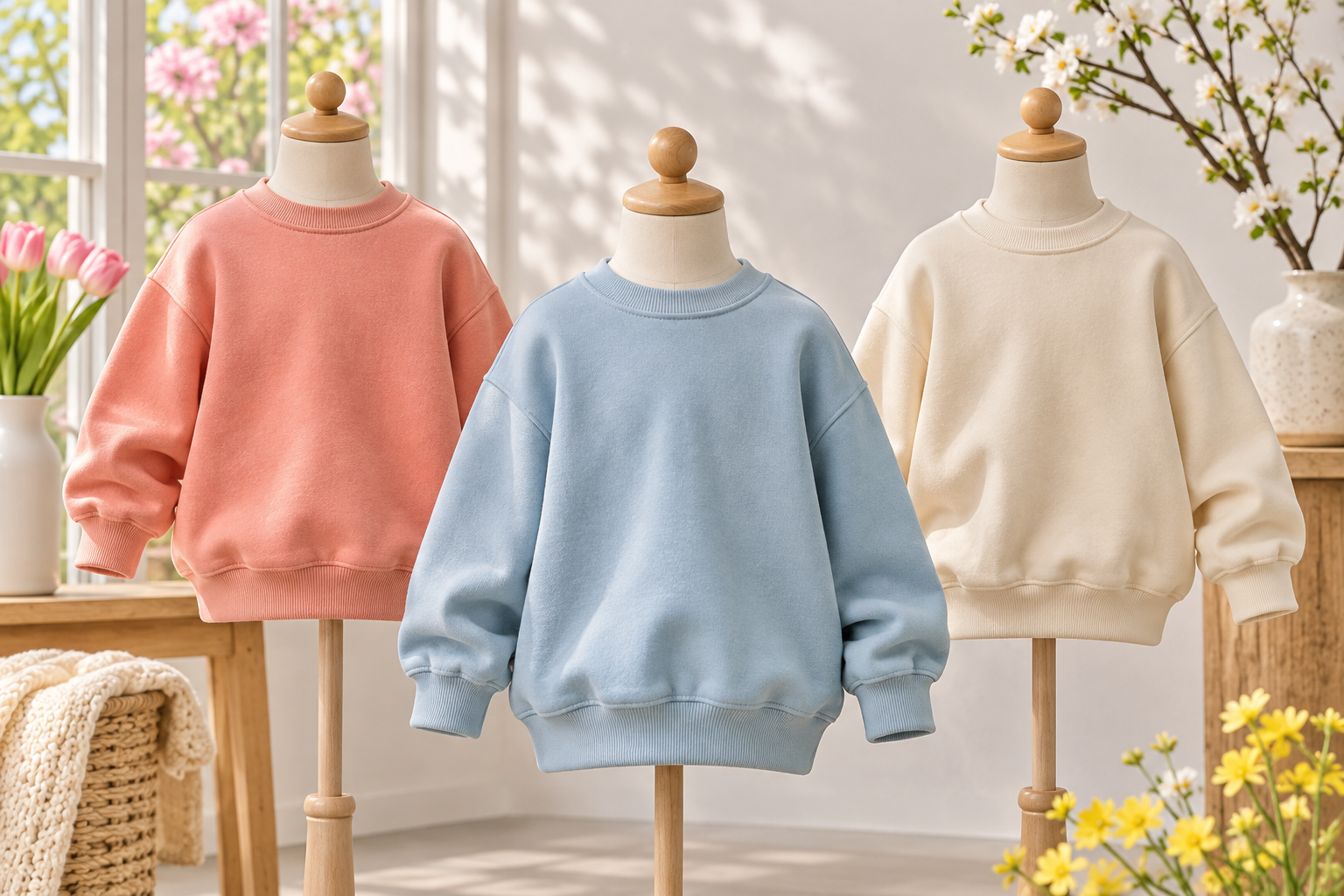
Build a children's sweatshirt range with coral, pale blue and cream, validating necklines, cuffs and wash durability.
Address Wear Before Visual Identity in Children's Sweatshirts
Colors, necklines, sleeves and localized graphics can create variety in spring/summer children's sweatshirts, but a playful look cannot replace consideration of dressing and movement. A style that looks loose on a hanger may still cause difficulties at the neck, underarms or cuffs. Define the target ages and sizes, wearing season and usual layering before setting visual priorities.
The following offers design and sample-development guidance, not a basis for determining children's clothing safety compliance. Market, age group and product structure affect requirements. Drawcords, small parts, decorations, chemical safety and similar matters require confirmation against target-market requirements and support from appropriate testing and compliance documentation.
Assess Three Candidate Samples Together
Candidates need not all introduce complex processes. Give each a clear purpose first so worthwhile variations are easier to identify.
- Cream crewneck pullover: focus on shoulders, sleeves and graphic placement, observing dressing and neckline recovery.
- Pale-blue zip-front style: use a front opening for easy layer changes, checking the relationship between zipper and body.
- Localized paneling: concentrate color changes at sleeves or pockets and validate seam effects on touch and movement.
Keep underlayers, size and photographic conditions consistent. Assess dressing and neckline recovery on the crewneck; interaction among zipper, neckline and hem on the open-front style; and movement restrictions or local bulk from seams on the paneled style. If all three change only color with identical proportions, their uses may lack distinction. If everything changes, improvements become difficult to explain.
Color can connect the range, but avoid assigning every color to an isolated style. Group main, base and limited accent colors as swatches and assess actual body fabric, ribbing, zipper tape and print together. Screen color references communicate direction but cannot replace physical approval.
Crewneck Pullovers: Assess Ease of Dressing and Stability Together
Ease of dressing depends on opening shape, neckline material, seams and how the wearer dresses. Increasing neck circumference alone may create a loose neckline or slipping shoulders. Compare rib structures and attachment methods before deciding opening size and shoulder room.
Have wearers perform age-appropriate actions such as raising arms, reaching, sitting and removing the garment themselves. Observe body ride-up, neckline catching and recovery afterward. Responsible staff should organize this under suitable conditions; unwillingness to cooperate should not simply be diagnosed as a fit problem. Children differ in dressing skills, so record whether assistance was provided.
With a soft neckline and heavier body, check for stretching at the joining seam; with a thick neckline, check for a hard inner edge. Recording the action, difficulty location and affected size helps patternmakers more than ‘the neck is a little tight’.
Open-Front and Paneled Styles: Small Changes Can Alter Overall Balance
Review open-front samples fully zipped, open and seated. Different stability in zipper tape and fabric may cause a wavy placket. Check left/right lengths, sewing and material combinations first. Simply adding stiff interfacing to suppress the symptom can make the front too thick and harsh.
Curved paneling can soften the appearance, but curves must remain consistent through patternmaking, sewing and finishing. First make partial samples in actual materials to assess flat seam allowances, reverse-side rubbing and dark allowances showing through lighter areas. Near underarms or elbows, reassess during movement.
Do not simply scale adult pockets down proportionally. Openings should suit actual use, and pocket bodies should avoid concentrated bulk at hems or side seams. For decorative pockets without storage use, clarify the intent and remove unnecessary complexity.
Use Sample Panels to Answer Graphic–Fabric Questions First
Soft prints, large rubbery prints and small embroidery create different hand feels and local weights. Near the chest, seams or zippers, first review actual-size artwork, then compare its position in wear. A proportion that works in a photograph may overcrowd a smaller size; approval of base-size placement alone is insufficient.
Base-fabric stretch, surface nap and color influence process results. Produce the same artwork on candidate fabrics and compare stretched appearance, edges, reverse-side feel and changes after planned care. Specific tests and methods should reflect the process, material and sales market. ‘Fine after one wash’ cannot replace full evaluation.
If reflective or similar materials serve only as decoration, avoid presenting them directly as a safety-protection claim. Before promoting performance, define its scope and supporting evidence, then decide the wording of the product description.
Revisit Approved Details After Care
Use the agreed care method and retain pre-care measurements and photographs of graphics and seams. Distinguish causes when changes appear: neckline distortion may involve ribbing, seams or finishing; a graphic becoming stiffer may involve the interaction between the decoration process and base fabric; sleeve twisting cannot be resolved by length adjustment alone. Record observations separately so material, pattern and process staff can identify what to review.
For planned sets, also compare top and bottom colors and appearance after care so individually approved pieces do not lose coordination as a set. Sample photographs document observations; formal performance and safety requirements need corresponding evidence. These records complement one another but support different judgments.
Preserve the Same Design Intent Across Sizes
Besides size labels, describe intended wear in development records, such as a thin underlayer or wearing alone, and whether cuffs are intended to be pushed up. Family habits vary; sample review establishes performance only under recorded conditions. Do not generalize one child's experience to all customers. Retaining these conditions reduces bias in fitting feedback.
After base-size approval, review representative smaller and larger sizes for shoulder width, sleeve length, graphics and pockets. Grading is more than increasing circumference: smaller necklines and graphics may become crowded, while larger sleeves and bodies may bunch differently. Retain front, side and movement photographs to separate proportion issues from posture differences.
Final handover records should link approved material, pattern and decoration versions and identify pending items. Internal care observations help screen options, but their frequency should follow project objectives rather than a self-imposed universal pass threshold. This keeps collection review grounded in actual wear and manufacturing evidence, rather than allowing color and graphics to conceal structural issues.