Autumn/Winter 2027/28 Outdoor Insulation Trends
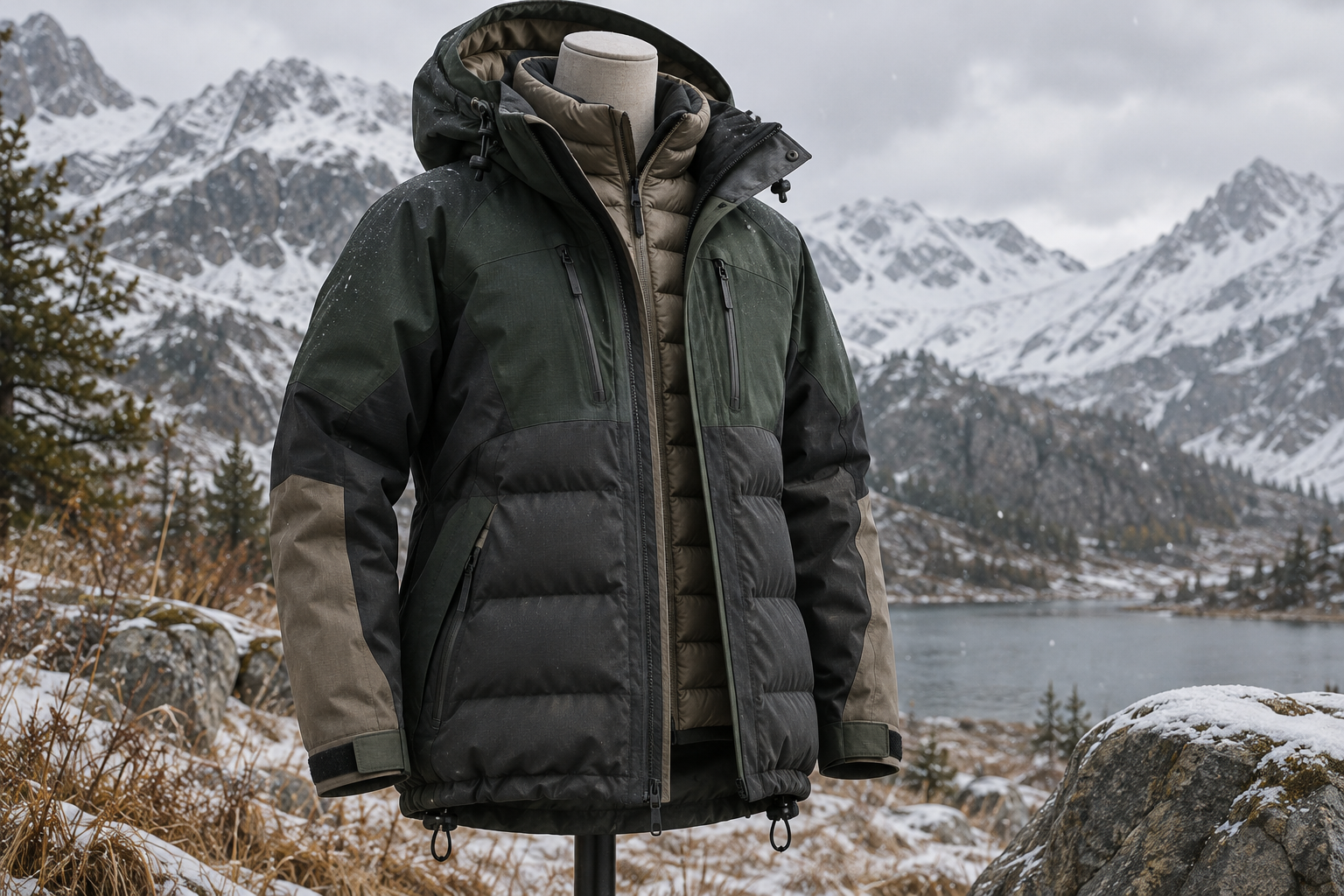
From wind-resistant outer layers and insulating midlayers to hood and hem adjustments, explore how an insulated jacket moves into sampling.
The Limits of This Forward-Looking Discussion
‘2027/28’ organizes discussion of the next autumn/winter product round; it does not denote a forecast validated by sales or market share. Starting with common winter outdoor temperature changes, movements and carrying needs, this article explores insulated-product development. Brands still need to select styles using target regions, customer activities and their own sales records, rather than treating one look as the direction of the entire market.
Warmth cannot be described by fabric thickness or fill weight alone. Layers, wind, humidity, activity intensity and individual perception all affect the experience. Rather than assign a universal temperature rating to a sample, define who wears it, where, for how long, when they stop and whether they carry a second layer.
One Winter Trip Reveals Four Different Needs
Imagine a winter hike starting in the city. Divide it into four moments to reveal demands a single jacket struggles to meet.
- Waiting at the station in the morning: low activity makes coverage and opening placement the first considerations.
- Climbing with a backpack after arrival: increased body heat makes ventilation control and easy layer changes important.
- Stopping at midday: extra coverage is needed again; check whether an overlayer accommodates the clothing already worn.
- Returning by vehicle in the evening: limited space brings garment bulk, packability and seated comfort into focus.
One collection may therefore include a lightweight wind-resistant shell, an easily added or removed midlayer and an insulated jacket for stops. Validate all three over the same layering system instead of making attractive samples separately and forcing them together. Record the layers worn during each fitting so differences in underlayers are not mistaken for outerwear fit problems.
A backpack adds complexity. Shoulder straps compress some lofted areas, hip belts may obstruct lower pockets, and back ventilation differs from the chest. Use patterns and basic samples to establish strap and belt contact zones before deciding paneling, storage and closure positions.
Light Layers in Motion: Address Movement Before Adding Technical Styling
Start a lightweight wind-resistant layer with shoulder–sleeve structure and closure efficiency. During forward reach, gripping and backpack use, check back pulling, cuff ride-up and neckline movement caused by the body. Enlarging the whole garment for more chest room may relieve local tightness but add waist and abdominal bunching. Adjust the armhole, sleeve shape and back room together.
For adjustable heat release, compare front openings, loosenable cuffs and localized ventilation. Every added structure should be easy to use: can it be reached with a backpack on, can the pull be identified with gloves, and does opening it affect pockets? If simple closures meet the use case, there is no need to keep adding fittings merely to look ‘professional’.
Do not compare materials only by touching flat swatches. Make similarly constructed trial pieces and assess bending noise, appearance after crushing, seam bulk and friction against the midlayer. Return to the whole garment afterward: pocketing, interfacing and zippers change how lightweight fabric hangs.
Adding Warmth at Stops: Balancing Loft, Coverage and Compression
An insulated jacket for stops generally needs to fit over existing layers. Alongside chest circumference, check whether sleeve width, cuffs and hem pass over the midlayer. Coordinate the neckline and hood with the inner collar's thickness. Similar flat measurements do not establish equal space when layered.
Zoning, quilting and fabric combinations can alter an insulated garment's appearance, but quilting shape alone does not establish thermal performance. More useful sample checks include even fill distribution, excessive tension when bending elbows and concentrated thickness at the front and armholes. Cropped lengths aid movement; longer lengths add coverage. Hem behavior when sitting and stepping needs separate validation.
If the garment is intended to compress into a backpack, compare packing actions, recovery after compression and appearance when worn again. Record consistent folding and recovery conditions to compare options, rather than treating one casual compression trial as a durability conclusion. A storage bag must fit the actual garment, not an idealized volume in a drawing.
Hood Openings, Collars and Hems Connect the Whole System
A sufficiently thick body may still leave the neck exposed if the collar conflicts with inner layers and cannot close. Establish whether the hood is worn alone, over a knitted hat or for a specific helmet-compatible use before developing hood depth, brim and adjustments. Check more than the front view: assess vision when turning, collar contact with the chin and storage of adjustment-cord ends.
Cuffs must accommodate glove overlap and everyday dressing; hem drawcords should avoid pressure points from sitting, leaning or belts. Test more than the tightened appearance. Have wearers adjust, retrieve items and dress or undress in sequence, recording points that catch, are hard to locate or need repeated two-handed rearrangement before changing the structure.
Similar Looks Can Require Different Development Routes
The same matte cropped insulated jacket can prioritize easy commuting and styling, or backpack walking and layer changes on the move. The former may need quiet, soft materials, convenient phone pockets and a collar that falls naturally when open. The latter should prioritize backpack contact, reachable adjustments and packing. Calling both ‘light outdoor’ leaves sample review without a clear sequence.
State priorities in the base-style documentation and explain which trade-offs serve which goals. Wider sleeves add layering space but may look bulkier; a longer hem adds coverage but may need arranging when seated. These are selection conditions for target users to assess, not automatic judgments of good or bad. They also help purchasing understand which details cannot be freely substituted when discussing materials and operations.
Review Three Candidate Systems Together
Instead of developing many unrelated functional jackets at once, prepare three clearly purposed combinations: urban travel and short walks, sustained activity with layer changes, and longer stops with extra warmth. Define each system's use assumptions, component garments, carrying method and performance aspects still requiring material or garment testing.
Discuss appearance, movement, layering and manufacturing separately in the selection meeting. If a system requires frequent collar or hem adjustment, retain movement videos and issue locations. If a material change improves hand feel, record the version and material code. Let these specific issues drive the next revisions rather than ‘lighter’ or ‘more outdoorsy’. The resulting collection documentation supports design discussion and helps purchasing allocate development resources.