Shirt Design Combinations: Collars, Sleeves and Textured Fabrics
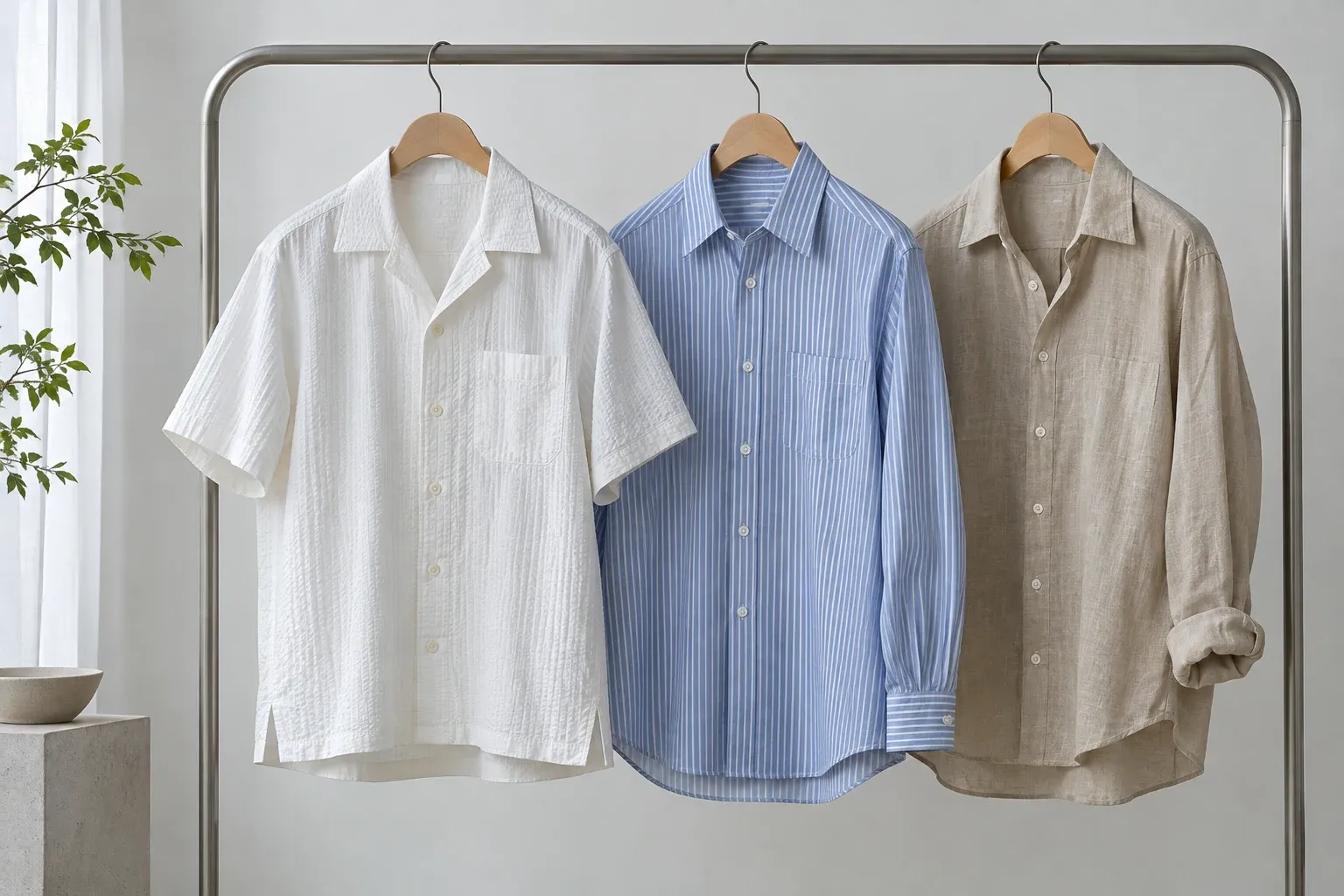
Explore poplin, seersucker and naturally textured fabric combinations through open-collar short sleeves, standard collars and relaxed long sleeves.
Why a Fabric Change Can Make One Shirt Pattern Look Like a New Style
Materials affect neckline, shoulder line and sleeve shape. A shirt defined in smooth fabric may drape differently at collar, front and hem in softer or textured fabric. Approving only the drawing, then choosing shell and interfacing separately, can miss these relationships.
This article compares standard-collar long sleeves, open-collar short sleeves and relaxed outer shirts to explore structural/material compatibility. Candidate fabrics and colors are design choices, not validated trends. Use actual swatches, samples and customer wearing needs rather than composition names alone.
Compare Three Materials Under the Same Conditions
Smooth Surfaces: Make Structure Easier to See
Relatively smooth fabrics such as poplin offer a starting point for comparing collar points, plackets, cuffs and pocket edges. For a neat appearance, sewing and interfacing choices directly affect details. Even with suitable swatch feel, check whether collar fusing or joining creates excessive stiffness or unwanted show-through in light areas.
Raised Texture: Approve Surface and Seams Together
Textured materials such as seersucker can create a relaxed look, but approval cannot stop at unsewn texture. Make placket, pocket and cuff panels to assess pulling, edge effects on texture and visible differences between interfaced areas and the body. Then review pattern and silhouette together in the whole garment.
Natural Slubs and Creases: Define the Variations to Preserve
Linen and linen blends can create natural surfaces, with actual behavior determined by the material. Specify intended creasing and drape so over-preparation for photographs does not create a gap from daily wear. For a defined collar, compare structures in actual fabric instead of simply demanding both naturalness and complete smoothness.
Ideally compare the three options with similar patterns, the same underlayer and photographic conditions. Identify differences before choosing pattern or material changes. Simultaneously changing collar, sleeves and fabric may produce fresh samples but little reusable development knowledge.
Color and pattern also influence trade-offs. The same stripe width may create different visual rhythm on relaxed outer shirts and neat underlayers. Use actual-size paper layouts to assess collar, placket and pocket combinations before full sampling, reducing proportion issues missed on small swatches.
Review Collar and Placket Both Fastened and Open
Collar points, stand and spread jointly proportion a standard collar; open-collar short sleeves need review of the fold and front-placket junction. Relaxed styles still need a defined soft fall or retained shape. Different targets can work, but clarify them in drawings and physical approvals.
Fit fully buttoned, then open the intended buttons, then wear fully open as an outer layer. Neckline shapes and front movement from placket weight differ across these states. Approving only the closed state may reveal awkward open display too late, increasing revision costs.
Sample interfacing and shell combinations early. Compare edge thickness, feel, show-through and planned post-care condition; harder is not automatically better. Balance stability and softness against collar shape and intended use for relaxed styles.

For stripes, checks or directional textures, draw directions on collar, placket, pockets and cuffs. Confirm manufacturing and consumption conditions for matching early. Retain actual-size drawings for intentional direction changes so different people do not improvise.
Set Visual Priorities for Stripe and Check Matching
Not every area needs identical treatment. Identify primary visual areas among front placket, pockets and collar, then discuss execution. Pattern direction, repeat size and cutting interact and need confirmation before sampling, rather than discovering conflicting requirements during manufacture.
Document intentional direction changes as design decisions with front and detail diagrams. For continuous patterns, approve the junction physically. Compare appearance, consumption and manufacturing together for an executable handover rather than demand that everything align.
Sleeves and Hems: Bring Static Proportions into Movement
Short sleeves require joint assessment of length, opening and upper-arm mobility; long sleeves add elbow, placket and fastening relationships. Relaxed shoulder lines affect more than width: sleeve cap, sleeve length and body tension may need review. Use the same actions to identify what improves.
Choose review movements by use rather than mechanically repeat every item:
- Office styles with substantial seated wear: Observe front and hem distribution when seated, persistent placket gaping and cuff operation.
- Travel or everyday outer shirts: Assess collar, shoulders, back and pockets with a backpack, forward reach and open wear, beyond standing photographs.
- Styles commonly worn with rolled sleeves: Check the reverse, sleeve placket and rolled thickness, including loosening or repeated rearrangement after movement.
Straight and curved hems produce different effects. For neat untucked wear, compare combined side-seam, vent and pocket positions. For tucked wear, assess length allowance after bending and sitting. Decide front/back length differences in full outfits, not flat views alone.
If arm raising moves the neckline, first examine shoulder–sleeve/back relationships. If one hem side persistently rises, assess front/back balance and sewing together. Specific actions and locations guide sampling better than ‘the fit is uncomfortable’.
Bring Surface, Structure and Care Back into One Garment at Selection
Record neck circumference, body length, sleeve length, placket and hem before and after care, inspecting interfacing, seams and texture. Use mutually agreed placement and measuring methods to avoid different-state comparisons. Review pattern direction, symmetry and edges together under similar light.
Multiple fabrics on one base style require more than bill-of-materials substitutions. Document each fabric's effects on collar, sleeves and placket, then define local adjustments. One may share the basic pattern while another needs key areas reapproved; retain the reasons in records.
Shared buttons, collar language or color groups can connect the collection while materials and sleeve lengths serve different uses. Reviewing full outfits, detail panels and post-care records together helps design and purchasing explain why each option works and keeps later samples on course.