Reworking the Ski Jacket Silhouette for Function
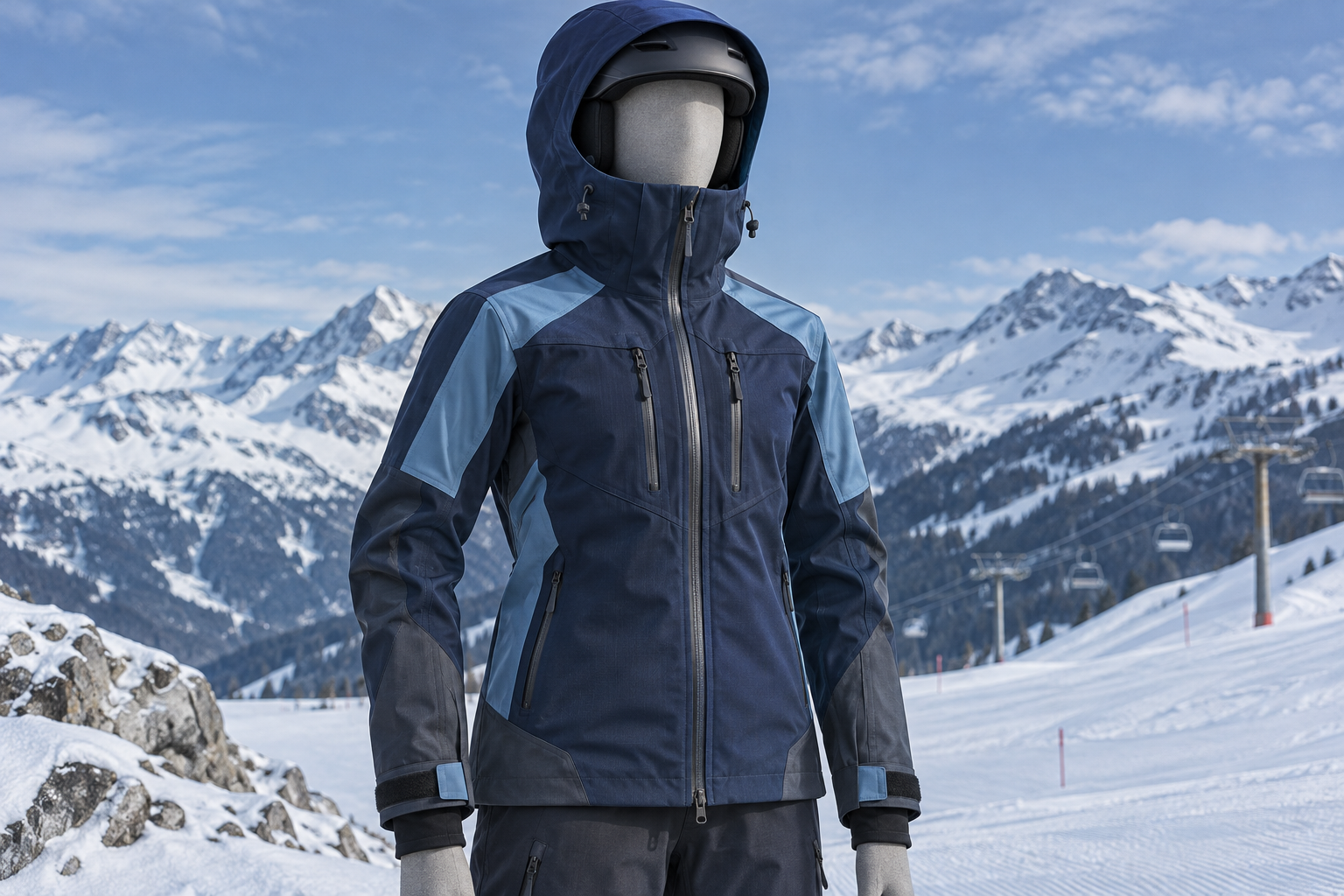
Confirm key ski-jacket structures, from helmet-compatible hoods and waterproof zippers to elbow movement allowance.
What Use Assumptions Does a Ski Jacket Need?
A ski jacket may feature bold color blocking, a clean silhouette or lofty volume, but development review must first establish its purpose. Different activities, climates and layering habits cannot share one vague ‘professional skiing’ requirement. Hardshells and insulated jackets particularly need separate discussion of layering room, movement allowance and material combinations.
This article examines design relationships by hood and collar, shoulders and sleeves, front body and hem to help brands ask clearer development questions. Waterproofness, breathability, warmth and other performance claims should correspond to specific materials, processes and test documentation. Similar-looking zippers or taped seams do not establish equal performance.
From Hood Opening to Chin: Protection and Vision Are Linked
For helmet-compatible products, fit with the intended helmet type and layers rather than simply enlarging an ordinary hood. Hood depth, brim, collar height and rear adjustment jointly affect head movement. Have wearers turn, look down and look up naturally, checking whether the hood follows, vision is obstructed or the collar pushes into the face.
With the collar closed, inspect chin contact, zipper top and inner materials. Soft local protection can improve feel but add bulk. Validate early whether gloved wearers can locate the pull and smoothly zip to the intended position.
Collar problems do not always originate in collar shape. If the entire neckline rises with the arms, also examine shoulder–sleeve mobility and forces on the body. Locate the source of pulling during movement before changing collar height to avoid creating new proportion problems.
Shoulders, Elbows and Underarms: Structure for Continuous Movement
Sleeves that lie smoothly while standing may not suit pole planting or forward reach. Have wearers reach forward, raise their arms, bend their elbows and turn in sequence, recording the movement. Observe back pulling, cuff ride-up, underarm bunching and shoulder pressure. Record the action and location, then relate them to the pattern.
Set-in, raglan and pre-shaped sleeves have different appearances and manufacturing conditions; seam count alone does not determine mobility. Added elbow volume should not create excessive bunching with arms relaxed. Added back room should be checked for volume concentrated around the shoulder blades under a backpack. Fit must accommodate movement and a natural resting position.
Color-block paneling can express structure but adds seams. Every panel line should serve material allocation, movement or a visual goal. If it crosses an area needing special treatment, validate sewing, seam taping and curves in actual materials before retaining it.
Front Storage: Position Pockets Around Retrieval Actions
List carried items before choosing pocket types and positions. Chest, side and inner pockets can serve different purposes, but overlapping pocket bags may create substantial bulk. Load actual items and observe front drape, zipper bending and opening strain rather than relying on pocket depth alone.
Also wear the intended backpack or belt. A pocket accessible while standing may be covered by straps; a side pocket lying flat at rest may press into the abdomen when bending. Record whether the opening can be found, items retrieved one-handed and movement performed without interference to guide revisions.
Review waterproof zippers, flaps, pocketing and seam treatments as one system. A trim that looks highly protective does not automatically establish protection for the entire pocket under intended conditions. Specify validation in the brief so suppliers' separate interpretations of components do not leave the whole product without a clear objective.
Hem and Powder Skirt: Connecting Jacket and Trousers
Assess a powder skirt alongside trouser waist height, underlayer thickness and jacket length. Have wearers sit, bend and raise their arms, checking continuous coverage, rolling and pressure after fastening. Where both jacket and trousers have adjustments, check whether they overlap at the same pressure point.
Cropped silhouettes emphasize compact volume; longer styles add coverage but may bunch when seated. Position hem adjusters at the side or front according to gloved operation and backpack contact. Provide a defined way to stow or secure adjusted cord ends and hardware.
Assess cuffs with gloves too. Outer cuffs, inner cuffs and glove openings may become too bulky or hinder dressing when layered. Compare overlaps during sampling and choose one suited to target wearers rather than adding every apparently useful structure to the same cuff.
How to Avoid Revising the Wrong Area
Cuffs Ride Up When Elbows Bend
Confirm the same underlayers as the previous round, then examine sleeve shape and underarm pulling instead of simply lengthening sleeves. Added length may improve coverage in motion but bunch at the wrist at rest. Keep before-and-after photographs of the same action to assess whether pulling truly decreases.
The Front Moves When the Chest Pocket Is Opened
Check opening position, zipper resistance, pocket-bag anchoring and front ease. Record if wearers must hold the garment before retrieving items, rather than checking opening size alone. If replacing the zipper helps, reassess it in the original material combination instead of deciding from an isolated trim sample.
The Powder Skirt Repeatedly Rides Up During Activity
Assess trouser waist, jacket length, layers and movement together, noting whether ride-up follows sitting, arm raising or continuous motion. Tracing symptoms through structural relationships reduces repeated ‘enlarge wherever it feels uncomfortable’ revisions and helps different roles understand why a small detail may need whole-garment review.
Review the Whole Garment Again with Actual Fabric and Insulation
Once the basic sample resolves mobility, repeat the full movement review using actual fabrics, trims and insulation. Loft changes armhole room, stiff materials change collar and hem folding, and pocketing weight affects the front. Previously approved patterns do not thereby have final validation.
Quilting, paneling and localized gathering affect volume distribution, but thermal performance still needs relevant evidence. Record appearance, mobility, closure convenience and untested performance separately, rather than treating one static photograph as proof of every requirement.
Organizing final review in wearing order reveals relationships more effectively than ticking off individual components:
- Put it on and close it, checking the collar, layers and basic coverage.
- Perform continuous movements and record how the body and openings move.
- Add carried items and a backpack, then repeat key movements.
- Sit and rest, then stand again, checking areas needing rearrangement.
- Remove and pack the garment, observing ease of handling and bulk.
Focus each round on a few clear problems and retain version, material and movement conditions. This preserves the design language while showing purchasing which structures are approved and which still need another sample or tests.