Men's Shorts: Length Proportions, Waist Construction and Pocket Details
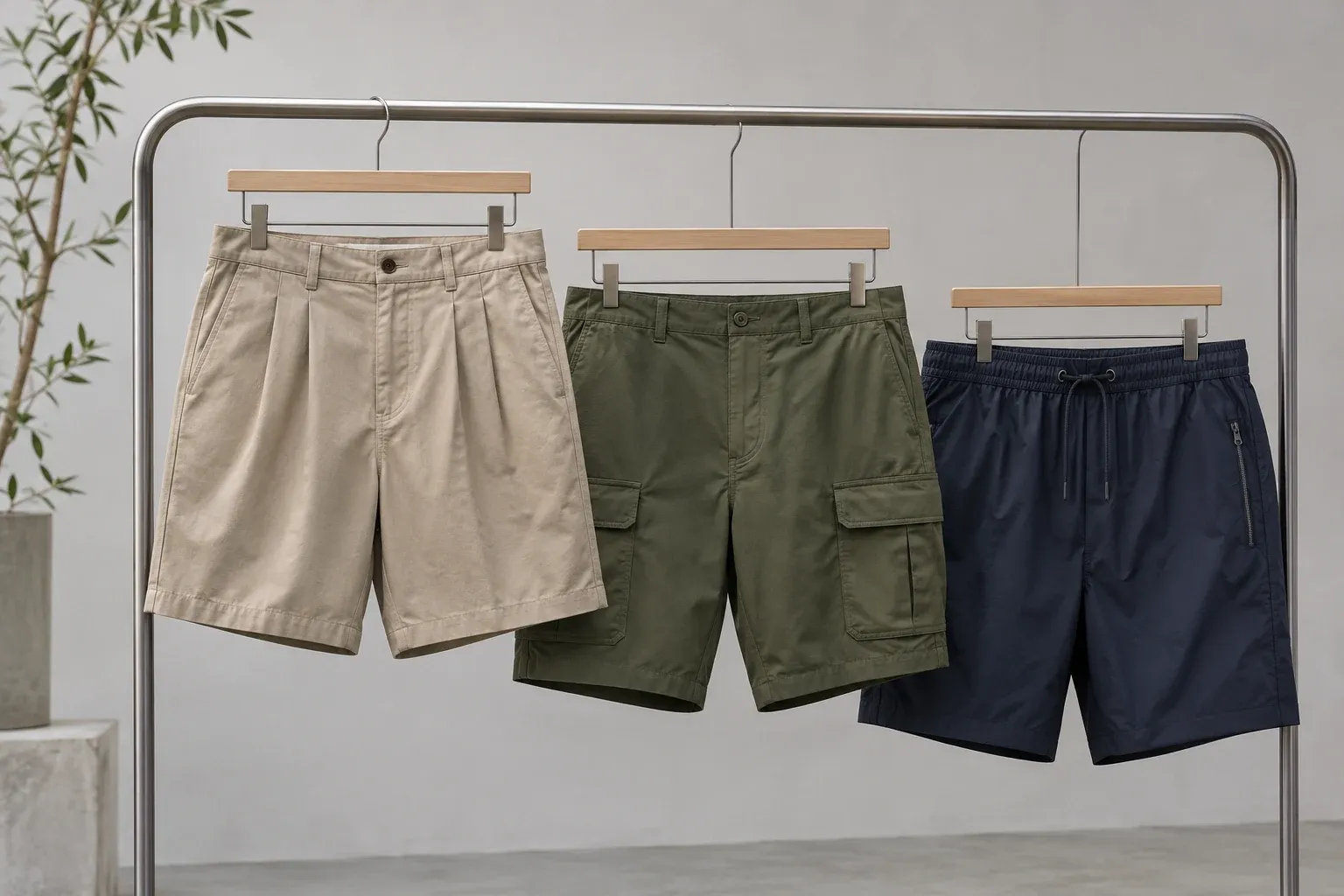
Analyze volume distribution, material selection and fitting validation for urban casual, light outdoor and athleisure shorts.
Review Men's Shorts by Starting with Sitting and Walking
Shorts may seem structurally simple, but length, leg width, front/back rise, waistband and pockets constantly interact. Shorts that look right from the front when standing may expose a different area of the legs than intended when seated; even when the waist measurement is correct, the shorts may sag once the pockets are loaded. Define the main use—urban everyday, light outdoor or athleisure—before prioritizing issues.
Length is more than one universal number. Waist position, wearer proportions and leg-opening width change the appearance. Keep styling and fitting conditions consistent and compare front, side, back and seated views to show the full silhouette changes.
Question 1: Neat Standing, but Pulling or Gaping When Seated
Locate seated pulling at the back waist, front crotch, seat or thigh. Enlarging leg openings alone may not resolve waist, hip or crotch restrictions; added length may not correct front/back balance. Record actions and locations, then determine revisions through pattern review.
For pleated shorts, assess how pleats open. Pleats closing naturally when standing should allow necessary seated movement, but must not remain pulled by pockets or turn outward unintentionally. Review front volume, pleat intake, pocket placement and fabric support together.
Keep one basic trouser pattern and compare waist/hip room and pleat adjustments in sequence. Use the same material or clearly mark substitutions so softer fabric's contribution is not entirely attributed to the pattern.
Question 2: Pockets Look Good Empty but Bulge with a Phone
Load a phone, cardholder or intended items, then walk, sit and retrieve them in sequence. Check gaping, sagging pocket bags, front distortion and objects pressing the leg. Deeper is not always better; overly low placement may make access unnatural.
Assess slanted-pocket opening angle, length and bag direction together; control side-pocket volume and placement. For clean urban styles, compare internal dividers or lower-bulk flaps instead of continually adding exposed pockets. Add capacity and stability structures when storage genuinely requires them.

Grouped belt loops, pleats and pocket openings create bulk affecting the front waist. Check whether inserting a hand opens pleats and whether they recover naturally afterward. Panels assess sewing; full shorts reveal weight and volume distribution.
Question 3: The Waist Measurement Is Right, but the Waistband Is Uncomfortable
Flat, partially elasticated and fully elasticated waistbands offer different looks and dressing methods. A flat waistband must coordinate with fly, belt loops and wearing position; elasticated versions have relaxed, worn and dressing states. Measuring one state alone cannot describe the full experience.
Side adjusters, internal drawcords and belts add adaptability, but check hardware position when seated, inner feel and excess ends. Recheck pockets when tightening concentrates gathers at the side or front waist. Simplify mechanisms needing repeated explanation.
Tucked and untucked tops also change waist feel and appearance. Choose review conditions reflecting customer habits and record underlayer thickness. A styling choice made incidentally for photography should not become the default for all sizes and customers.
Question 4: A Different Fabric Makes the Shorts Look Like a Different Style
Cotton twill may define pleats and pockets, lightweight nylon or other light fabrics may create different volume, and cotton-linen blends bring natural texture. These are candidate directions; actual swatches and samples determine performance, not composition names alone.
For two fabrics on one pattern, compare front fullness, pocket support, leg-opening shape and sitting creases. Softer materials may need different pocketing or stabilization; crisp fabrics may make side pockets overly prominent. Define the silhouette to retain before deciding whether to change fabric or pattern.
Check show-through in light-colored trousers in different wearing states, especially pocketing, internal seams and waistbands. For washing or other surface treatments, link before-and-after dimensions and appearance rather than approve all proportions on an untreated sample.
Compare Two Pocket Options with One Partial Sample
Where fabric is uncertain, make comparable waistband, pocket-opening and side-seam panels in each candidate. Include pocketing and reinforcement, comparing flat, hanging and loaded states. This eliminates clearly unsuitable combinations before full sampling.
If panels already concentrate thickness, discuss seam or material adjustments with technical staff. If overall proportions remain unclear, a full pair is still needed; do not ask a panel to answer questions outside its scope. Defining each sample's purpose helps buyers sequence development.
What to Recheck Across Sizes
After base-size approval, review representative smaller and larger sizes. Mechanically scaling leg openings, side pockets and pleats may make sizes look like different styles. Preserve design intent while meeting each size's wear and movement needs.
Fit reviews should cover seated exposure, stepping, squatting and loaded pockets, beyond waist and length. If larger-size openings gape more, recheck waist/hip and pocket-bag relationships rather than simply shorten openings. If smaller-size side pockets look oversized, assess proportion and actual function.
Keep size, version, material and movement conditions beside photographs for joint design and patternmaking assessment. Without them, an isolated detail photograph readily invites different interpretations.
Describe differing small- and large-size feedback separately before choosing a compromise figure. Both may need pocket repositioning for different reasons: visual proportion in one, access and waist/hip relationships in the other. Resolve separately, then review consistency; this often preserves intent better than moving every size the same distance.
Turn Fitting Issues into a Clearly Defined Range
Retain clearly purposed urban, light outdoor and athleisure options, giving waistband, length and pockets specific roles. Share palettes or trim language without forcing identical pocket positions and materials for visual uniformity.
At handover, link approved garments to materials, measurements and revision records, retaining post-care appearance. Later waistband changes or added side pockets then have clear review requirements. For buyers, these records explain design reasons and suitability for target customers.