Choosing Fabric Weight and Construction: From Swatch Comparison to Garment Validation
Build a fabric-screening method for the actual style using knit and woven structures, hand feel, color and post-wash behavior.
Two fabrics with similar composition and weight can yield different drape, support and care behavior in garments. Interpret numbers alongside construction, finishing and style. Define the product first, then eliminate unsuitable options through swatches and trials so comparison goes beyond ‘feels better’.
Define the Use Before Looking at Weight
Two light-colored short-sleeved tops may have different needs as a close-fitting underlayer and a relaxed outer top. The former prioritizes layered thickness and contact feel; the latter also needs checks of transparency, neckline support and body silhouette. ‘Summer cotton T-shirt’ alone does not tell suppliers which experience comes first.
Define the fabric-selection task in a complete sentence: ‘For everyday wear as a standalone top, aiming for natural drape, light colors that do not clearly reveal the outline of an underlayer, and retention of the target proportions after the planned home-care method.’ Then discuss candidate compositions and fabric weights. These are development targets; whether they are achieved still requires actual validation, and they must not be turned directly into performance claims.
State non-negotiable conditions and acceptable trade-offs. Lightweight targets may require different colors or structures to control transparency; a sculptural silhouette cannot be pursued through weight reduction alone. Set priorities where goals conflict.
What Fabric Weight Does—and Does Not—Tell You
g/m² expresses fabric mass per unit area. Record swatch condition, finishing and batch when comparing, since moisture and treatment conditions affect observations and tests. Weight ranges in purchasing documents should correspond to actual sampling conditions; one swatch reading cannot represent every later delivery.
Weight alone does not fully establish thickness, softness, breathability or durability. Yarn, construction, density, nap and finishing jointly affect garment behavior. Specify relevant tests and criteria for particular performance needs rather than relying only on heavier or lighter fabric.
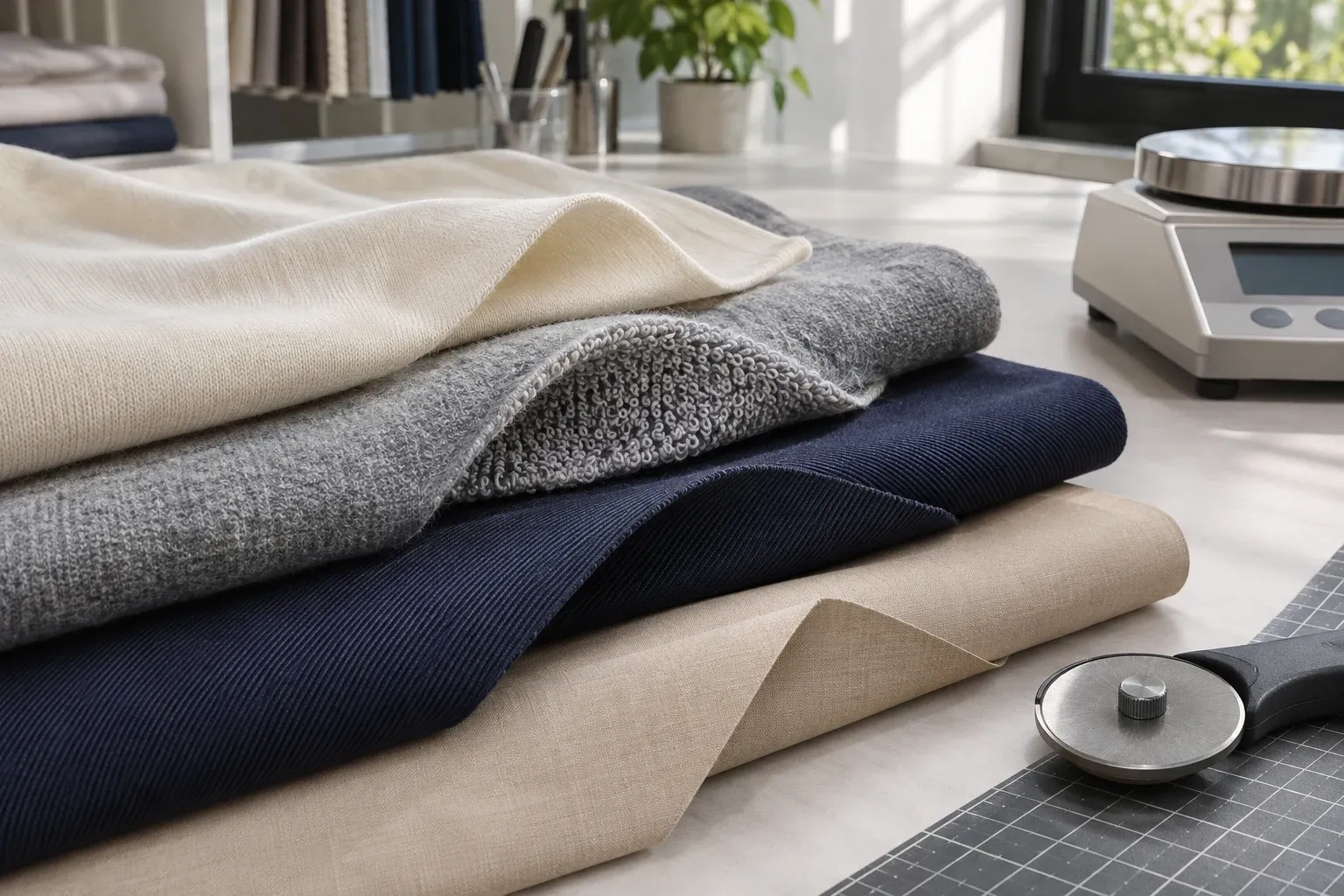
Cut candidate swatches to the same size, mark face/reverse and warp/weft or lengthwise/crosswise directions, and compare light transmission, drape, folded thickness and surface texture. These are initial screening observations, not laboratory performance tests. Their value is consistent comparison and clearer explanations of required changes to suppliers.
Practice Trade-Offs with Three Candidates
This material-selection example does not represent actual swatch data or purchasing commitments. Suppose a relaxed short-sleeved top has three candidates: A is smooth and naturally draping; B is lofty with greater body support; C has a fine texture and folds thinly.
Sample A: The Look Is Close, but Check Vulnerable Areas
If overall drape matches the direction, there is no need to keep searching for a ‘more premium’ fabric; next, check the neckline, shoulders and light-color transparency. Necklines need ribbing or another supporting structure; shell fabric alone is insufficient. Making the neckline combination helps establish earlier whether the material choice supports the whole garment's goal.
Sample B: The Silhouette Works, but Assess the Wearing Experience
Greater support is not necessarily better. In the actual use setting, check underarm and waist bunching, natural appearance when seated and compatibility with intended layers. These features may suit a sculptural design; a soft, draping target warrants another comparison.
Sample C: Distinctive Texture Needs Manufacturing Trials
Texture affects graphics, seams and decoration. Make a seam section, small pocket or actual-size print panel before selecting it for a complete garment. If its distinction is visible only close up, consider whether final presentation and target pricing justify that difference.
The result may be retaining one option or searching again. Know why options were eliminated instead of labeling every unselected material ‘not good enough’.
How Priorities Differ for Knits and Wovens
For knits, assess both sides, curling tendency, stretch recovery and post-wash dimensions. Single jersey, piqué, terry and fleece have different face and reverse structures; assess graphics and skin-contact areas on the relevant construction. Stretch does not remove the need for movement ease in the pattern.
For wovens, start with construction, yarn, surface, bias distortion and seam behavior. Shirt collar stands, trouser pocket openings and jacket elbows need different support, so trial fabrics in the intended parts. Directional behavior may also affect markers, stripes and checks, and wear.
Shrinkage and skew are influenced by material design and processing conditions. CottonWorks quality resources discuss these variables together too. Retain measurements and appearance records under actual care conditions during development, rather than treating ‘cotton shrinks’ as a final explanation requiring no validation.CottonWorks: Shrinkage and Skew
Align Pricing and Usage Conditions Before Comparing Purchases
Prices per meter and per weight cannot be compared at face value. Consider usable width, pricing unit and actual consumption assumptions; stripes, checks, directionality and defect handling may change usable yield. Rather than invent a universal waste allowance, have each quoting party state its assumptions so comparisons relate to the same garment.
Ask how swatches, full rolls and subsequent batches relate. Fast sample availability does not mean fast production supply; stock in one color does not establish availability for the whole palette. Confirm material and supply status for each required color before choosing a representative sample color.
For cost-saving recommendations, ask suppliers to distinguish what remains and what changes. If only the supply arrangement changes, focus on purchasing terms. Changes to construction or finishing require swatch and garment review. ‘Equivalent substitute’ needs defined comparisons, not just a label.
Two Final Reviews Before Material Selection
First, review the garment: does the actual material still suit the target sizes, closures and decoration combination? Comparing fabrics on the same basic style reduces pattern interference. If a pattern must change to suit a fabric, include that change in the decision.
Second, review supply: which specification, finish and color does the approved swatch represent, and can regular supply maintain agreed conditions? Define batch review requirements and substitution-triggered checks at approval. A stock swatch does not establish long-term supply capability.
Retain not just a favored fabric, but the reasons for selection and actual validation results. When budgets, colors or supply change, these reasons help determine which features must remain and which can be negotiated.