Choosing Printing, Embroidery and Washing: Sampling and Approving Decoration Processes
Compare artwork, base fabric, hand feel and process sequence, recording key checks in panel and garment validation.
Decoration determines more than graphic appearance: it affects local feel, garment weight, production sequence and care behavior. Place the design in its actual garment before comparing processes to reduce cases where an attractive panel fails as a complete product.
Turn Process Choices into Product Questions
Define the graphic's role: a main visual recognizable from afar or a detail revealed close up? Priorities differ for next-to-skin chest placement, loose outerwear and frequently bent cuffs. Give the manufacturer graphic size, base fabric, color and wearing location together.
Do not ask feasibility from a thumbnail alone. Provide actual-size files and a garment-proportion view, identifying essential lines and colors and elements open to adjustment. For small text, gradients or textures, ask what is achievable at target size before discovering lost detail after scaling onto the garment.
One process name may include different materials and production routes. Ask whether sampling and bulk production use the same system and what needs review after changes in base fabric, color or graphic size. Compare complete solutions rather than just the names ‘printing’ and ‘embroidery’.
Comparing Three Different Needs
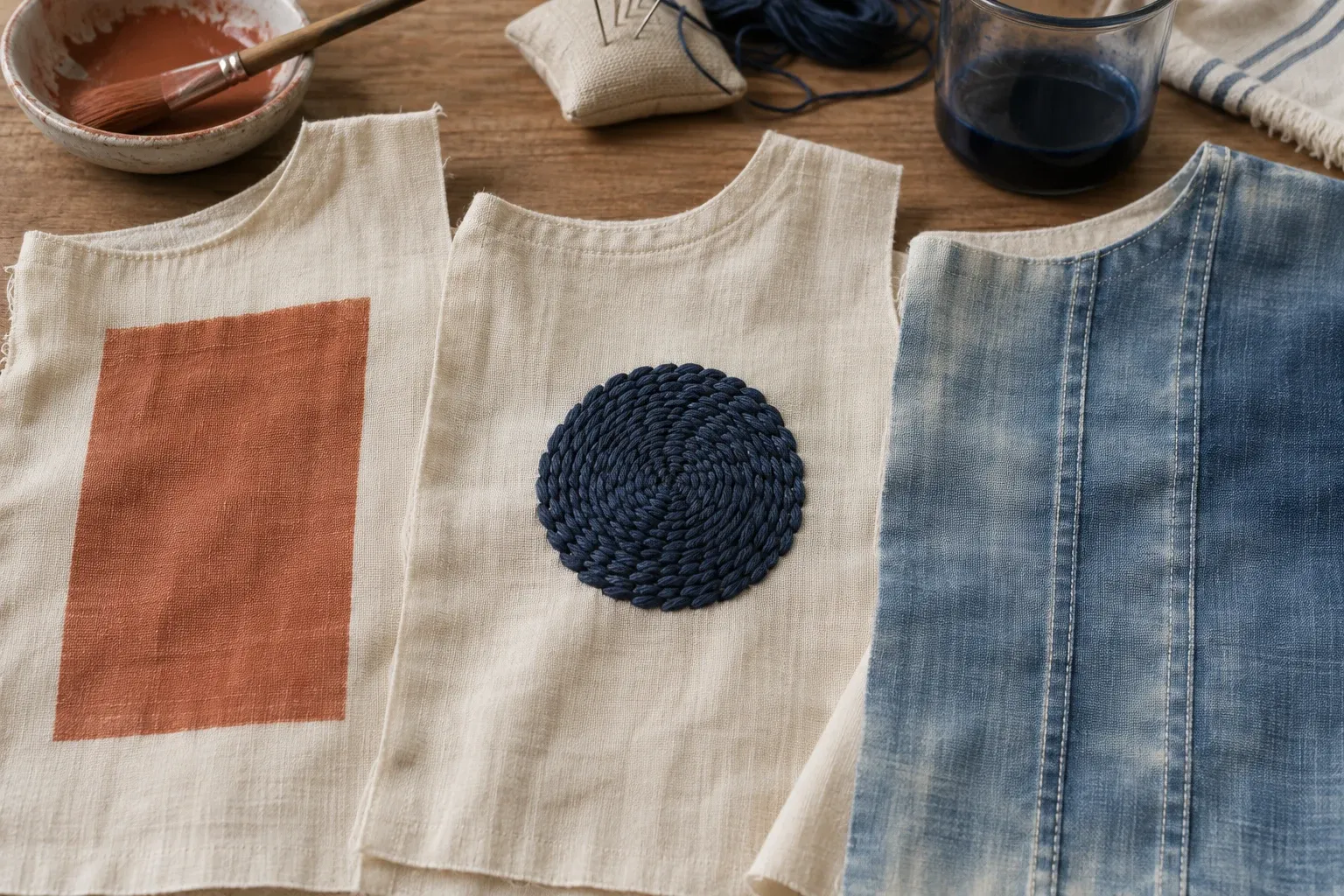
Solid Color Areas and a Soft Hand Feel for the Main Visual
Discuss print options first, then compare coverage, edges and flexing on actual fabric. Printing routes suit different designs, fabrics and quantities. Artwork-specific samples are more direct than a process brochure. Retain the base color and both sides, comparing decorated and undecorated areas by touch.
Large coverage also needs checks of local support and folding in wear. A smooth standing print may crease differently when sitting or raising arms. For soft drape, do not pursue color richness while overlooking the entire print area's effect on the body.
A Logo with Dimension and Stitch Detail
Embroidery creates different appearances through stitch direction and coverage, but small text, sharp corners, fine lines and dense areas need actual-size approval. Scaling may prevent exact retention of detail. Compare definition and density, then consider simplification instead of immediately demanding an exact screen match.
Check the reverse too. Backing edges, thread ends and local thickness affect skin contact; near collars and cuffs, assess bending and dressing. For easily distorted shell fabrics, have process specialists trial suitable stabilization and backing combinations rather than merely increase stitch density.
An Aged Effect Across Color, Seams and Surface
Discuss washing or other garment finishing against a whole-garment target. Observe fabric color, seam contrast, local abrasion, dimensions and trims. One washed swatch cannot establish the appearance of pocket edges, plackets and thick seams in a garment.
Natural variation needs references. Mark key areas and permissible variation on a target sample, specifying uniformity or tonal depth. ‘Each piece differs slightly’ does not make every deviation acceptable; visibly handmade effects should not carry a promise of exact replication.
Discussing Print and Wash Sequence on One Sweatshirt
This is a combined-development example, not a process recipe. Printing before washing requires confirmation that later treatment preserves the target graphic. Washing before printing requires confirmation that the treated surface, garment dimensions and positioning suit printing. The routes may yield different effects; supplier availability alone should not determine the order.
Use partial combination samples to compare graphic edges, feel, fabric changes and processing order. Once direction is settled, make an actual garment because panels cannot fully reproduce body tension, seam thickness or whole-garment positioning. This is especially important near pockets, zippers or across seams.
Also confirm that shell, ribbing, thread and trims can undergo the treatments together. One independently approved component may still change when assembled with others. If a component must be replaced, identify whether color, appearance or function changes, then arrange relevant review.
Review Received Samples from Four Perspectives
View the Overall Effect from a Distance. Place the sample beside the garment-proportion drawing to check size, negative space and visual balance. Enlarged detail views alone can conceal a graphic that is too dominant or misplaced on the whole garment.
Inspect Workmanship Close Up. Observe edges, fine lines, text, stitches and local base fabric for unexplained gaps, puckering or unevenness. Different lighting angles help locate issues, but final judgment should use mutually agreed viewing conditions.
Check the Inside. Inspect reverse sides and edges in skin-contact areas for unwanted hard spots, residue or thickness introduced by decoration. Internal finishing should suit the actual use.
Return to Use Conditions. Bend, stretch or perform agreed care according to the intended scenario, then observe changes. Agree methods, repetitions and acceptance conditions together; do not describe one casual rubbing trial as durability certification.
Coats technical resources link seam puckering to tension, material structure, dimensional changes and feeding, among other factors. Have manufacturing staff investigate the actual combination rather than immediately demand different thread or greater stitch density.Coats: Causes and Remedies for Seam Puckering
After Approval, Retain a Reproducible Basis
The approved appearance sample, artwork and garment placement must correspond. Retain actual-size files, adopted base fabric and color, confirmed process sequence and physical effects photographs cannot clearly express. Define placement reference points rather than estimate from model photographs.
Specify whether artwork remains the same size or changes across garment sizes. Constant dimensions preserve logo size but change its proportion to panels; size-dependent artwork may add manufacturing and management requirements. Choose according to design goals and actual supply arrangements.
Ask separately about development preparation and subsequent manufacturing when comparing quotes. Different options may require different file processing, panels or placement preparation; a per-garment processing price alone misses these differences. For anticipated repeats, confirm retention of artwork and the actual adopted method, and whether changed base fabric requires new samples.
Recheck affected areas after fabric changes, enlarged graphics or revised care methods. Reproducible decoration means files, materials and physical results explain one another. It avoids restarting aesthetic arguments every round without treating one attractive panel as a guarantee under all conditions.