Keeping Garment Repeat Orders Consistent: Shade Variation, Material Batches and Process Review
Maintain approved appearance and wearing performance through retained first-order samples, batch identification, color comparison and repeat-order samples.
A repeat may look like the previous order, but involves new material batches, supply status and production conditions. Define the intended consistency first: individual appearance, coordinated colors, wearing feel or harmony when sold with first-order stock. Different goals require different review scopes.
What Is Useful to Retain After the First Order?
Approved garments, fabric and trim samples, color references and actual production records should correspond. Do not retain a random stock piece: identify its style, color, size, materials and process conditions. Record extra hand finishing so exceptional treatment is not assumed to be naturally reproducible next time.
Consider changes from light, contamination, creasing and storage time. Color references may need separation from frequently fitted samples. Check reference validity before a repeat; a visibly changed old sample is no longer an unquestionable color standard.
Concise records should reflect final first-order conditions, not temporary development materials. Retain actual fabric codes, batches, finishing, trims and key process conditions for an accurate starting point with suppliers.
Distinguish Three Situations Before Reordering
Materials Remain Available and Specifications Appear Unchanged
Define ‘same’: composition, construction, weight, usable width, color and finish, not merely product code. Compare new-batch swatches with valid retained references for appearance, feel and manufacturing behavior. Confirm changed supply conditions even with the same supplier.
Review combinations such as neck ribbing, interfacing and pocketing together. Similar shell fabric does not establish a similar garment; support, recovery or color differences may first emerge in accompanying materials.
The Fabric Code Remains, but Color or Finishing Has Changed
Specify the change: hue, sheen, feel, thickness or post-wash state. Record new-versus-first-order differences separately instead of calling everything ‘shade variation’. Surface and direction cause some appearance differences that dye adjustments alone cannot resolve.
After refinishing or redyeing, review the adjusted swatch and assess whether relevant sections or a whole garment need remaking. A closer color does not automatically resolve hand feel or dimensional changes.
The Original Material Is Discontinued and Needs Replacement
List essential product features before comparing substitutes. If the first order's selling point is soft drape, matching weight alone may miss the goal. For a crisp silhouette, compare candidates in actual structures. State which approved elements the substitution affects.
Tell all relevant parties if new goods must be sold alongside the first order. Customers may accept slight color differences between batches but reject a visibly mismatched set. Agree acceptable variation around actual sales and use.
Fix Color-Comparison Conditions Before Discussing Results
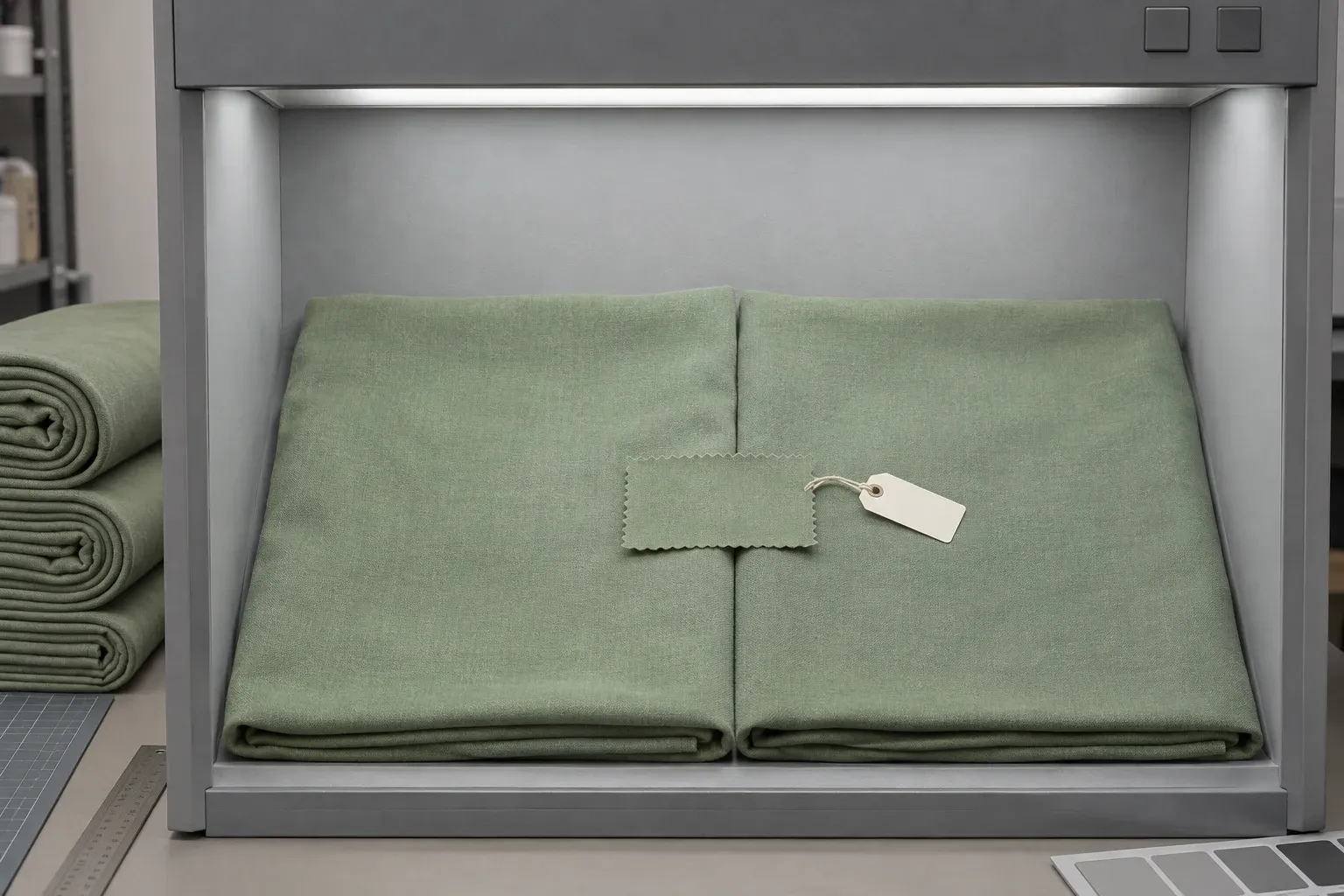
Compare physical standards, new swatches and valid first-order references against a consistent background under agreed lighting, with similar fabric direction and viewing methods. Nap, texture and sheen can look different when turned, so record sample direction.
Photographs locate issues, but phones, exposure and screens alter color. For remote communication, include reference and test sample in one frame and describe conditions. Base final decisions on agreed physical or instrumental references. Instrument readings need corresponding equipment, calculation methods and acceptance ranges; one isolated value is not universal for every product.
For special lighting in the sales environment, discuss additional comparison conditions before bulk approval rather than discover coordination issues after all materials are committed.
Color approval should reflect combinations. Shell, ribbing and thread use different materials and may look different despite the same color code. Review them together in actual positions and define the required closeness, rather than judge isolated small samples.
Maintain Batch Links from Rolls to Packaging
For multiple dye lots or rolls, establish traceable identification and planned checks within and between rolls. Cutting should avoid unintentionally mixing visibly different materials in one garment; corresponding parts and sets also need matching arrangements. Methods depend on production and order requirements; ‘watch for shade variation’ in a document is insufficient.
A simple traceability example links a fabric batch to cut-panel groups, those panels to a production stage, and garments to cartons. Teams need not share an identical coding system, but must be able to trace related goods after finding one issue.
Maintain these links during packing. If allocation mixes first-order goods, define identification and matching beforehand instead of visually sorting finished garments afterward. Improvised color matching adds uncertainty and may obscure original batch information.
Why Review a Repeat-Order Sample Even with the Same Materials?
Process and equipment arrangements, finishing, trims and pressing can affect garments. The repeat sample should reflect current production conditions as closely as possible, then be compared with the original approved garment for silhouette, dimensions, feel and details. Confirm that earlier technical solutions still apply.
For example, review neckline combinations and post-care condition after a ribbing batch change; after supply changes for washed trousers, review seam contrast, key dimensions and trim appearance. These are review perspectives, not predictions of failure or a demand to restart full development for every repeat.
Set scope according to changes. Where validated conditions remain unchanged, focus on actual supply and the first production piece. Expand relevant validation for substantial material or process changes. Linking checks to changes preserves necessary controls while reducing pointless repetition.
Repeat-Order Confirmation: Focus on Changes and Scope
Reference the original order and define quantity ratios, fabric and trim status, approved samples, packaging and delivery. For substitutions or accepted differences, identify the covered color, batch or combination; a single ‘agreed’ should not approve unreviewed items.
After delivery, link new retained samples to first-order references. If repeated adjustments gradually move the product away from original conditions, establish a mutually accepted current baseline. Repeated orders should build usable supply experience rather than treat an aging sample as an unchanging answer.