Spring/Summer Dress Trends: Construction and Key Design Details
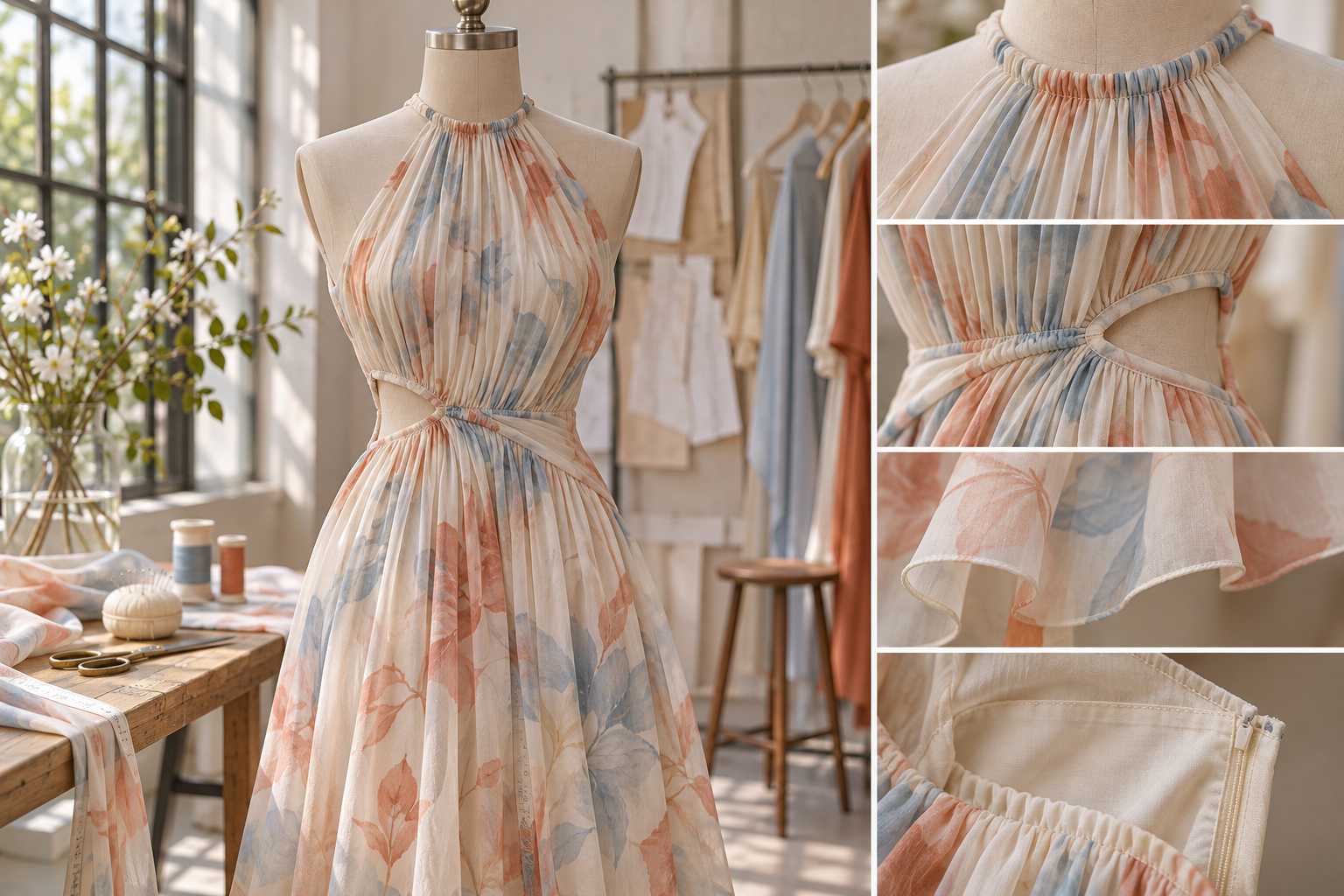
Explore how gathering, waist shaping and lightweight edge finishes change a dress's silhouette.
Choose Dress Construction by Starting with the Intended Volume
Pleats, gathers, localized elastic and waist openings can all shift a dress's visual focus, but their material, dressing and care requirements differ. They are not interchangeable based on reference-image effects alone. First specify where volume belongs—shoulders and sleeves, bust, waistline or skirt—and how it should change between standing and walking.
This article discusses these details as spring/summer dress design directions, without claiming any process is already mainstream. Selection should also reflect customers, channels, occasions and manufacturing conditions. Images offer a visual starting point; partial samples and full-garment fittings establish whether an option suits the product.
Make a Pleated Panel Before Deciding the Whole Skirt
Regular pleats need defined direction, spacing, intake and closed appearance. Assess more than a flat tabletop sample: hang and gently open it to observe volume, light and shadow. Waist anchoring and hem finishes may alter how pleats open, so ideally include the intended joining area in the sample.
The conditions for forming and retaining pleats may differ between materials. Confirm the specific process with fabric and finishing suppliers, and state the expected post-care appearance early. Fresh pressing on a new sample does not establish that consumers' care will preserve the same result.
Before a full dress, compare localized pleat intake and overall weight. Dense gathering at the waist of a long skirt may hang very differently from a small sample. For light movement, also check whether lining restricts the shell, seams alter pleat lines and the skirt is easy to arrange after sitting.
Gathering and Localized Elastic: Focus on Volume Distribution
Gathering creates volume at a join; localized elastic also affects fit and dressing. They may look similar but have different development requirements. Gathering requires defined concentration and left/right distribution; elastic also requires checks of stretch, recovery, seam feel and actual dressing.
Compare different gathering amounts in the same material, marking lengths before and after joining and the distribution of fullness. Assess reverse-side feel in body-contact areas, not just the front. Include waist lining or stabilizing tape in the sample; otherwise, the garment may be thicker and stiffer than the approved panel.
Localized looseness after fitting is not necessarily caused only by elastic. Joining length, material weight and garment tension may contribute. Record whether it occurs before wear, after movement or after care, then investigate with process staff instead of simply tightening it every time.
Waist Openings: Define Coverage Before Finishing Edges
Waist shaping and cutouts draw attention while making edge stability and inner coverage more sensitive. Draw front, side and inner relationships, showing expected opening positions when standing, sitting and raising arms. One static front view cannot adequately communicate the allowable movement to the patternmaker.
Resolve edge methods in partial samples before checking forces in a whole garment. Binding, facings and other finishes create different thicknesses and feels and should be compared with the fabric. Excess stabilization may flatten an edge but change soft drape; no edge control may allow movement during wear.
Underwear and layers also affect assessment. Fit with combinations appropriate to the product positioning and record them. For more flexible wearing options, compare coverage solutions rather than assuming every customer uses the underlayer from the sample photographs.
Lightweight Edges Require More Than Front-Side Stitch Comparisons
Rolled hems, binding and overlocked-and-turned finishes change weight at hems, cuffs and necklines. Make comparable samples at the same location in actual materials, checking curling, sewing tension, reverse-side neatness and show-through under light.
Inspect seam and zipper junctions especially carefully. Lightweight bodies joined to stable zipper tape may ripple; layered edges may form bulky spots. Review cutting and sewing conditions before changing trims or methods, rather than temporarily pressing the issue flat.
Skirt length and shape also affect edges. After partial approval, compare the garment laid flat and hanging, then confirm length and left/right balance. Position the sample as agreed before formal measurement to avoid misleading comparisons between different states.
Organize Sample Review as a Wearing Sequence
Give each action a different question within the wearing sequence:
- Dressing and fastening: do openings, zipper reach and local feel match the plan?
- Walking and turning: do the skirt, lining and seams restrict one another?
- Sitting and standing: do waist and opening changes stay within the intended range, without repeated rearrangement?
- Raising arms and undressing: does the body move noticeably, and is removal easy?
Describe observations first. ‘The side-waist edge rolls upward after sitting’ is clearer than ‘the waist looks wrong’. Then assess materials, patterns and construction separately, retaining comparable before-and-after photographs. Avoid changing waistline, material and gathering together, which makes even an improved second version difficult to explain.
Post-care review should return to the approved intent: do pleats, waist recovery, inner-layer length and edge appearance still meet requirements? Use agreed methods and criteria rather than turning one internal observation into a general performance guarantee.
Retain the Reasons Behind Construction in Technical Records
Besides material and process names, explain key decisions: a softer edge preserves natural drape, or reduced gathering avoids side-waist bulk. If materials or operations later change, manufacturers can assess whether the original goal is affected rather than mechanically copy an appearance.
List unresolved issues separately from approvals. Approval of a partial sample and pending post-care review of the whole garment are different states. Marking them helps purchasing allocate resources for the next round.
Expand One Successful Style into a Related Dress Range
Choose one clear construction focus as the collection's core, varying length, sleeves and coverage. Adding pleats, cutouts, elastic and complex edges to every style disperses development resources without necessarily clarifying the look. Purchasing reviews can consider appearance, material conditions and manufacturing complexity together to identify changes that genuinely expand wearing options.
After approval, retain partial samples, garment versions and explanations. When reusing a process, check changed materials and locations rather than copy its name alone. These records give design variations a clear foundation and help later sampling and production understand earlier decisions.