Textile Exchange 2026 Report: Global Fiber Production and Recycled Sources
Review 2025 fiber production, polyester and textile-recycling data, and the source information material purchasing needs to record.
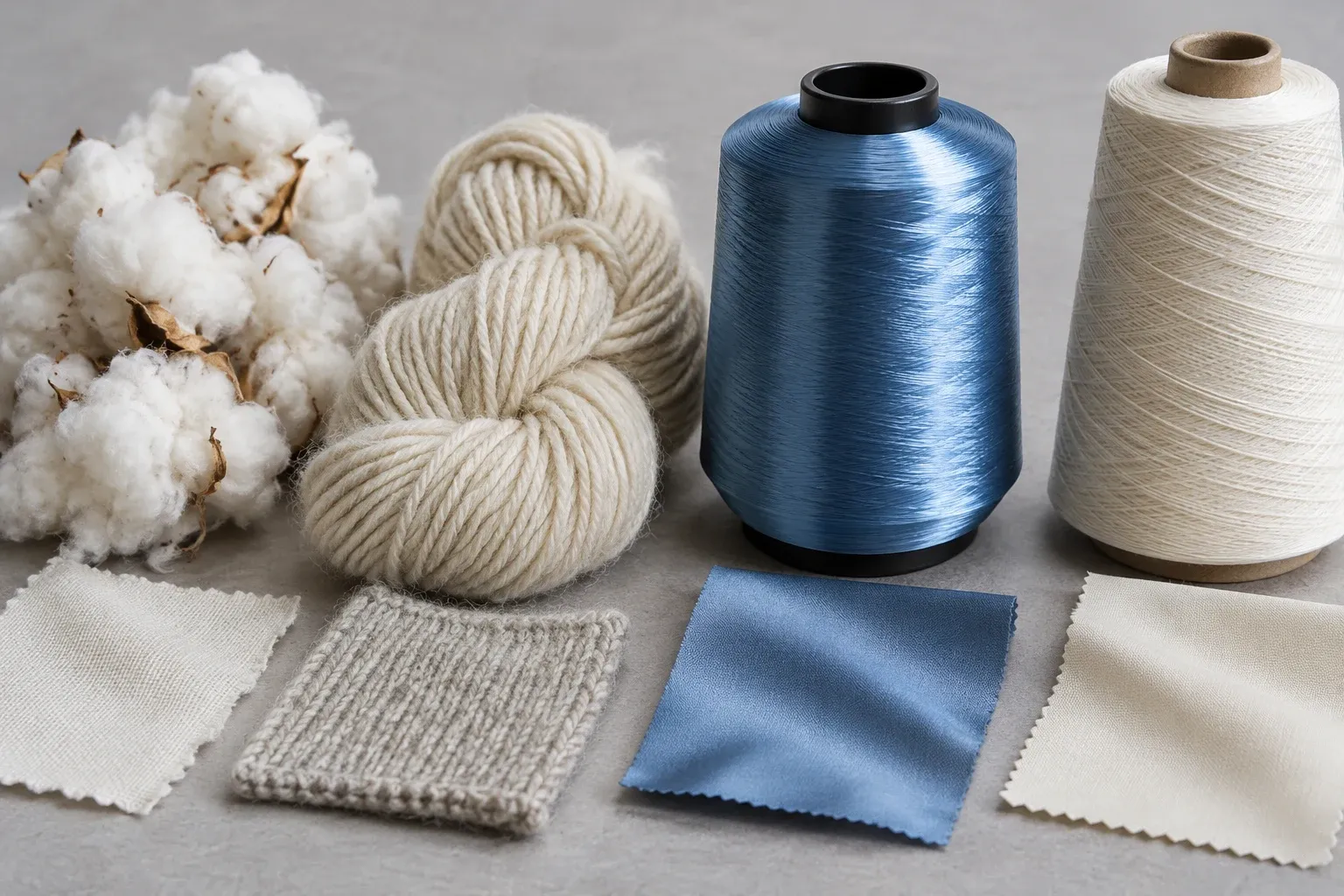
Illustrative image on the theme of fibers and yarns.
What Does the Report's ‘Production’ Measure?
Textile Exchange released its Materials Market Report 2026 on September 22, 2026. It estimates global fiber production at 139 million tonnes in 2025, versus 132 million in 2024, with polyester at 82.5 million tonnes, or 59% of global fiber output. These are weight-based production figures across multiple end uses, not clothing retail value or demand for a particular garment category.Textile Exchange Report Summary
First identify what an industry report measures. Increased raw-material output offers supply context; whether a specific style merits development also depends on customers, use and the brand's own sales feedback. Keeping these levels separate prevents one macro figure from deciding an individual product.
The Same ‘Recycled’ Label Can Raise Different Purchasing Questions
Raw-material origin, processing stages and garment performance need separate explanations. A recycled-material name alone cannot fully identify waste origin, processing steps or the final fabric proportion. First establish whether the supplier offers fiber, yarn or fabric, then request relevant documentation.
For a swatch described as containing recycled polyester, ask about feedstock, composition wording and batch details, then check which company, product and validity period the documents cover. Company-level documentation does not automatically explain the entire current delivery.
This site's application of the report is that material records should trace a claim to a particular fabric. Linked swatch codes, purchase records and supplier documents let technical and brand staff discuss the same item.
Three Easily Confused Assessments
- Source assessment:Where the raw material comes from and how far the information can be traced.
- Suitability assessment:Whether the fabric meets the garment's hand-feel, structural and care needs.
- Description assessment:Whether actual supply documentation supports consumer-facing material statements.
All three may proceed together, but a positive answer to one does not complete the others.
Put a Candidate Fabric Back into a Real Style
For a knitted top, first assess drape, stretch recovery, surface hairiness and ribbing compatibility, then make representative neckline, cuff or seam samples. For light colors, include transparency and internal seam-allowance appearance in review.
Allow explanations for differences when comparing fabrics on the same pattern. One may produce a more natural hem, another a more defined silhouette; a single better/worse ranking may be inadequate. Record the designs each suits and required manufacturing adjustments.
Repeat orders introducing new materials also need continuity with the original product. Retain the original and compare color, touch and worn condition, specifying acceptable changes. Similar material names alone do not establish an approved equivalent.
Create a One-Page Material Decision Record
A single page can identify fabric and target style at the top, source evidence and sample observations in the middle, and reasons for adoption, further validation or deferral below. List missing information directly rather than fill gaps with vague ‘eco-friendly’ or ‘high-performance’ claims.
For adopted options, confirm links between production supply and development swatches. Even with the same fabric code, changed color, finishing or supply batches may require resampling. This gradually converts industry reporting into usable material-selection experience.
Reports help teams ask better questions. Answers for specific products still need supplier information, physical comparison and style validation together.