Texprocess 2026 Post-Show Observations: Connecting Development, Cutting and Sewing Systems
Use the organizer's report to explore digital apparel-production exhibits and records needed for specific process trials.
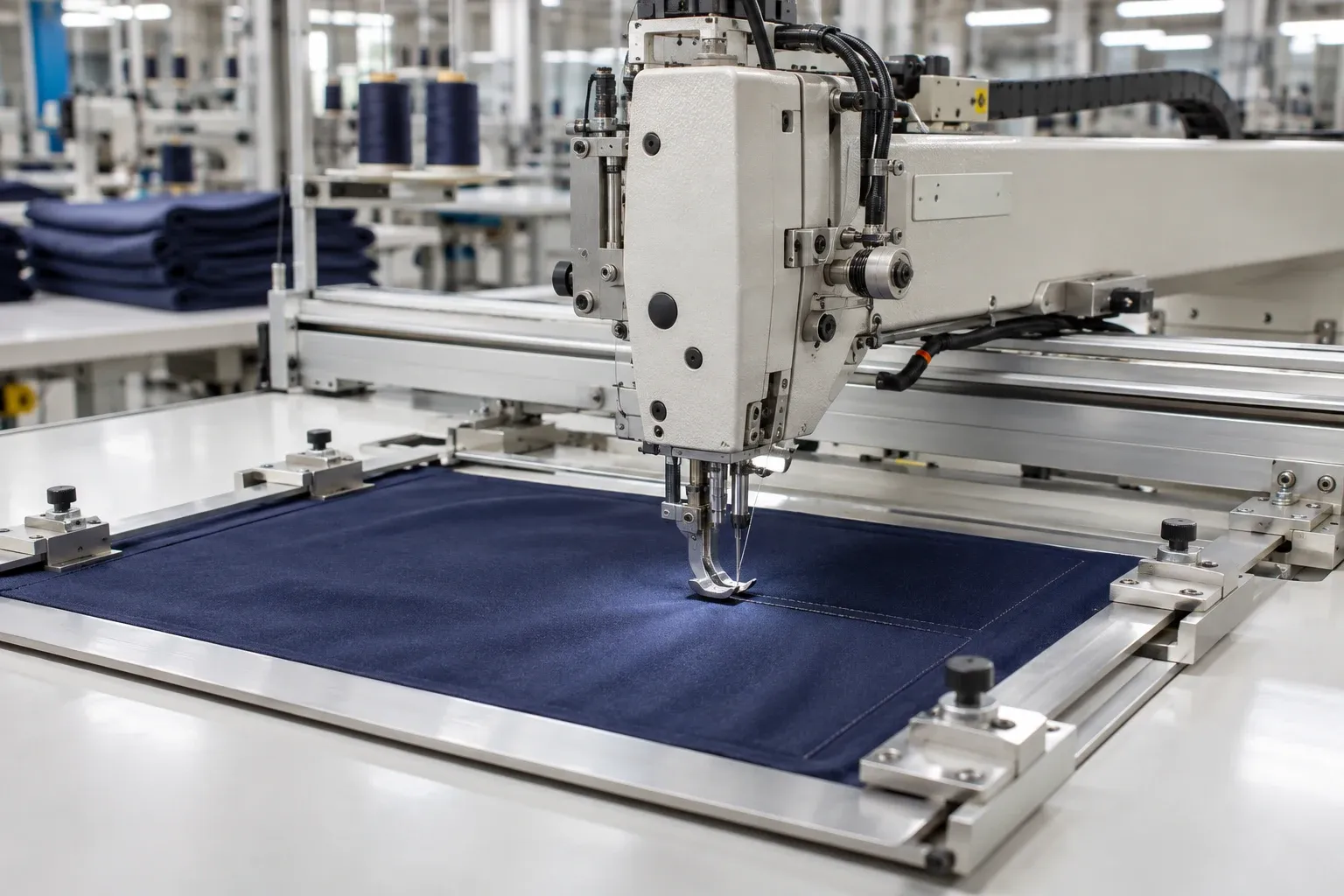
Illustrative image on the theme of automated garment sewing.
How Should Purchasing Interpret the Report's Emphasis on ‘Connection’?
On April 24, 2026, Messe Frankfurt released a joint Techtextil and Texprocess post-show report, reporting more than 36,000 visitors and 1,700 exhibitors across the two fairs, with participants from 112 countries. It discussed connections among materials, manufacturing and digital systems, citing product development, image-based cutting and sewing systems connecting operations as application areas.Organizer's Joint Post-Show Report
These are exhibition-level observations, not proof of equipment performance across all garments. In this site's view, assessing the value of ‘connection’ should start with garment handover problems and whether a technology can reduce them.
Start the Assessment with One Pocket
Suppose a team wants more consistent patch-pocket appearance. Timing one completed pocket can overlook panel preparation, positioning, loading/unloading and changeovers. Observe the full sequence from panels entering the station to finished work reaching the next operation.
Ask suppliers to use representative project fabrics and pocket structures and explain conditions that must be fixed first. Record limitations involving thickness, shape or auxiliary fixtures. Thin, slippery, stretchy or curling fabrics may need different handling; one smooth demonstration cannot cover every product.
Retain at Least Three Operating States for Comparison
- Steady production:Observe consistency of appearance, dimensions and operation across repeated identical tasks.
- Style changeover:Record preparation required after changing size, material or structure.
- Exception handling:For misalignment, material jams or other interruptions, establish how operators detect, correct and verify the issue.
The three states answer different questions. Steady production reflects ideal conditions; changeovers and exceptions more closely reflect daily arrangements. All require actual process trials.
Can Upstream and Downstream Operations Keep Pace with New Equipment?
An improved operation does not necessarily shorten total delivery time. Insufficient panel preparation, inconsistent upstream information or downstream inspection backlogs may merely move the waiting point. Observe adjacent inputs and outputs too.
For software and data links, establish how files enter, revisions travel and the floor identifies the active version. If systems still require duplicate manual entry, identify where and who verifies it. A successful demonstration data flow also needs validation against actual style changes and everyday exceptions.
Maintenance and staffing are application conditions too. Consumable replacement, training, fault support, spare parts and later adjustments affect operating stability. Discussing these connects demonstrated capabilities with everyday operations for purchasing teams.
Which Trial Results Merit Another Round?
Records need not be complex. For a defined operation, note material and structure, operating conditions, output observations, exceptions and unresolved issues for an evidence-based review. Compare solutions with the same samples and quality targets where possible.
If an option works clearly for only a few products, retain that scope initially. Before expansion, validate other materials, sizes and styles. For poor results, distinguish equipment capability, fixture preparation, input information and process planning as causes.
Fairs reveal manufacturing possibilities; application assessment places them in concrete tasks. A repeatable, observable question builds reliable experience more readily than immediately pursuing automation across every style.