Epson and Tess van Zalinge Rework Archival Prints with Digital Printing
Explore graphic scale, short-run manufacturing and physical sample approval through a limited-edition scarf project announced in 2026.
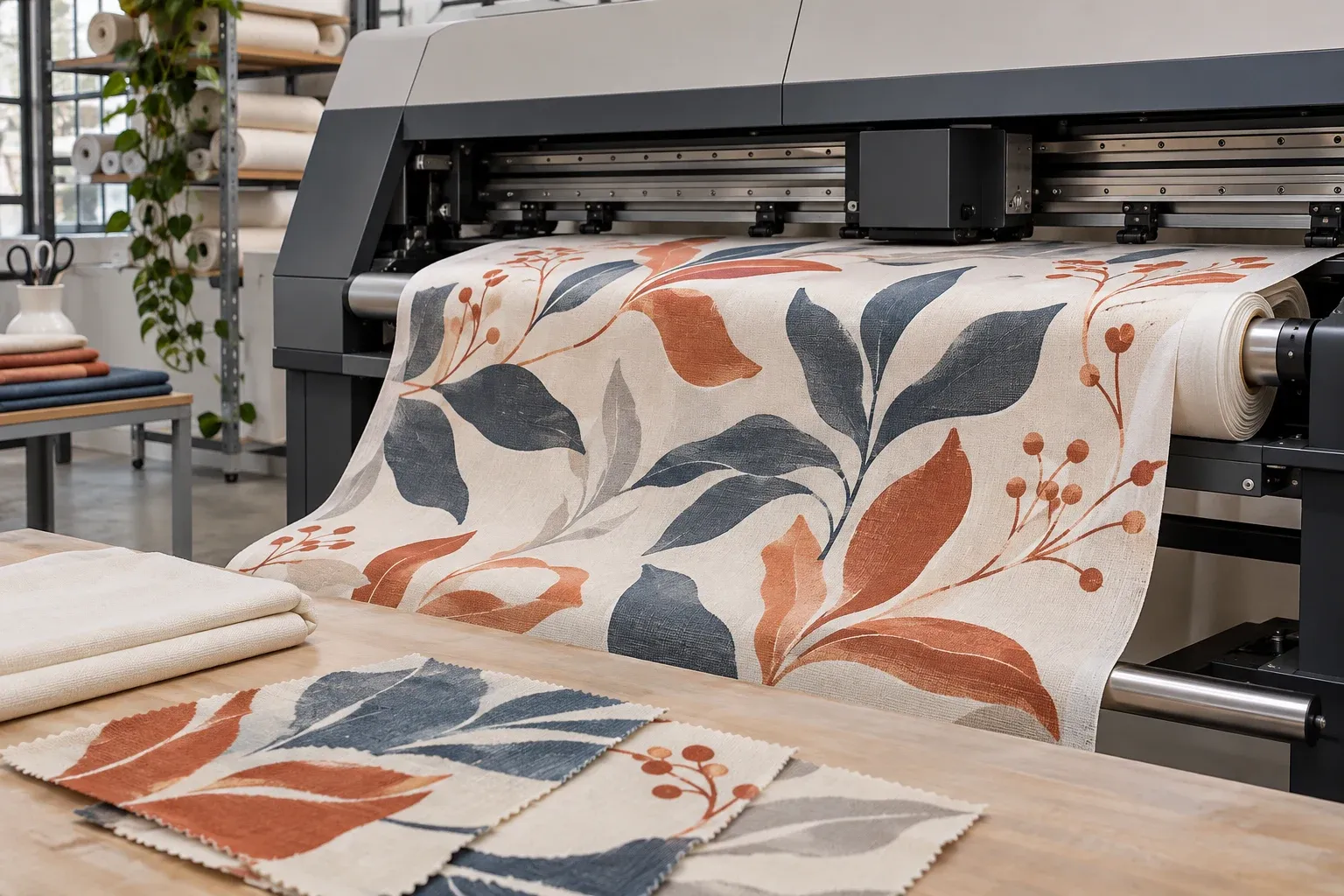
Illustrative image on the theme of digital textile printing.
Three Archival Prints Reimagined for Scarves
On September 3, 2026, Epson announced a collaboration with Dutch designer Tess van Zalinge on a limited-edition scarf project marking the brand's tenth anniversary. Three archival prints were recomposed for scarves and produced using a Monna Lisa ML-13000 direct-to-fabric digital printer and pigment inks. The announcement stated that 35 scarves were made per design, each individually identified.Epson Official Release
This case offers a specific development starting point: archival graphics can be redesigned for a different product format. The following is this site's graphic-development analysis, not an assessment of the project's finished-product performance or other equipment.
What Questions Must a Graphic Answer on a New Product?
Simply scaling a dress's all-over print onto a scarf may not preserve visual depth. A scarf's visible area constantly changes when flat, folded or wrapped around the neck; a shirt divides artwork through plackets, sleeves and seams. Consider these changes before setting motif size and placement.
From Digital File to Actual Size
Early actual-size patterns or paper layouts can reveal whether main motifs disappear in folds, edges are cut off or left/right relationships conflict with wearing direction. Paper cannot replace fabric samples but can expose some placement issues early.
For all-over prints, check repeat-unit joins. Directionality or gaps subtle on a small screen may stand out across full fabric. For placement prints, hand over artwork with patterns, seam allowances and permissible positioning variation rather than an isolated image.
Why the Same Palette Feels Different on Another Base Fabric
Base color, surface texture and translucency influence the result. Identical files do not ensure visually consistent results on two fabrics. Confirm whether base fabrics match before comparing fine lines, shadow detail, color transitions and negative space.
Feel is part of sample selection too. Large print areas and fine-line graphics can affect wear and folding differently. For soft, flowing designs, touch, fold and hang samples rather than approve colors only on a flat table.
Describe unsatisfactory color through observable issues: merged local tonal details or an entire palette differing from the reference; changed fabric, files or production conditions. This feedback supports the next adjustment more effectively.
Review Samples Twice: As Graphics and as Products
First assess composition, scale, definition and color relationships. Then review the finished state for seams, folds, binding and visible areas in wear. The stages differ in focus but should retain links between the same samples and files.
A main motif too near a scarf edge may crowd the binding; a chest motif may be interrupted when a shirt placket closes. These are not simply print-resolution issues: composition and product structure must be addressed together.
Arrange post-care observations according to the product plan, recording conditions and results. Equipment descriptions or one sample's appearance cannot support wash-durability or other finished-product claims without relevant validation.
A Useful Archive Retains More Than the Final Image
For reuse, retain originals, adjustment reasons, actual dimensions, base-fabric information, sample photographs and garment applications. When adapting to shirts, dresses or accessories, teams can identify reusable elements and work needing renewal.
Digital production creates more room to explore graphic combinations and short-run trials. Product viability still depends on artwork, fabric and structure realizing the intent together. Fully validating one representative product before expanding colors and formats turns visual ideas into reusable development documentation.