Circulose Announces Swedish Plant Restart to Advance Cotton Textile Recycling
Following the November 10, 2026 company announcement, examine restored recycled-feedstock supply and its links to yarn and fabric development.
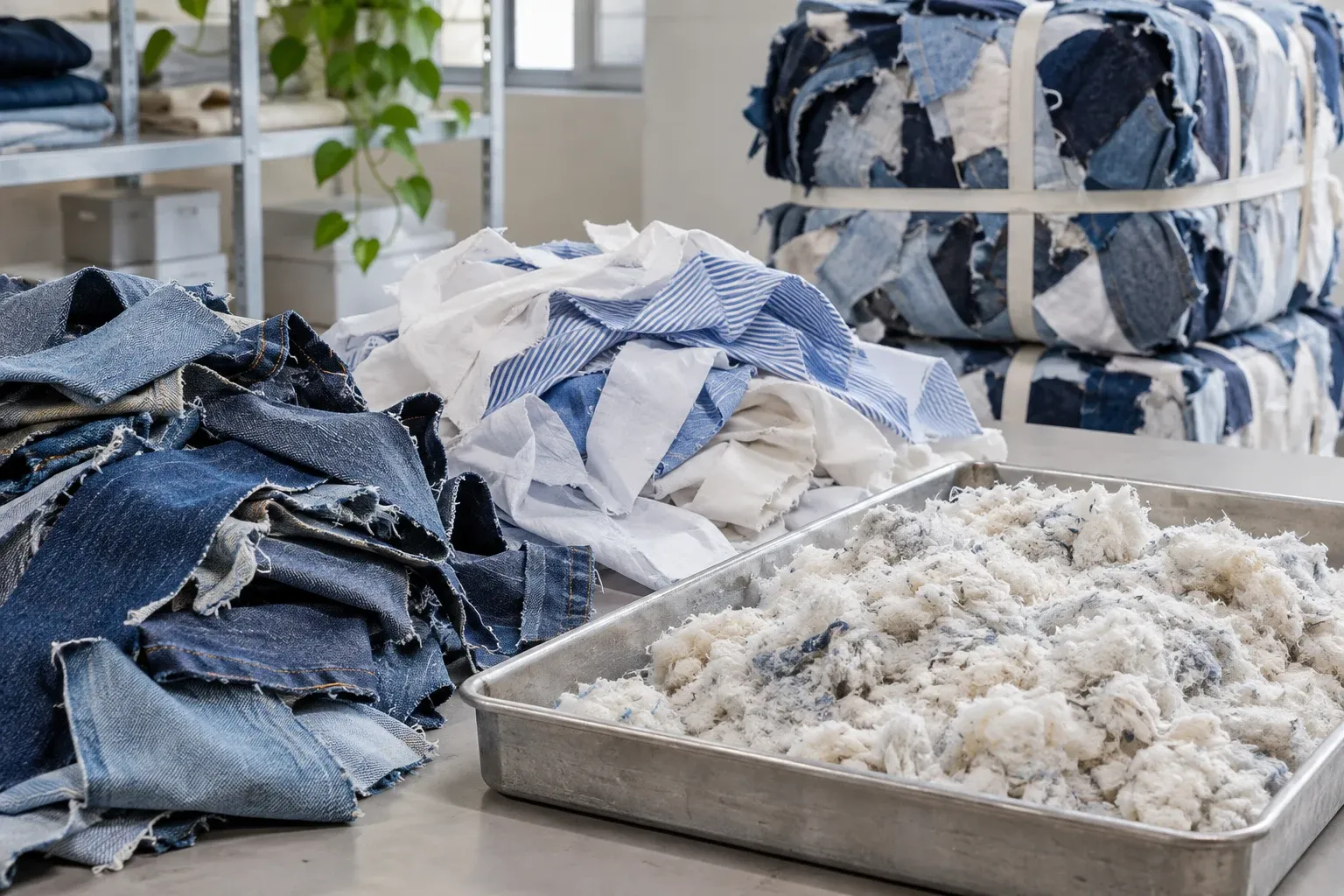
Illustrative image on the theme of cotton textile sorting and recycling.
What Has Been Confirmed About the Swedish Plant Restart?
On November 10, 2026, Circulose announced resumed production at its commercial-scale Ortviken plant in Sundsvall, Sweden. The company linked the restart to confirmed demand, cited commitments from 16 brands and said its next focus would be safely ramping up output and customer deliveries. These developments come from a company announcement and should be understood in relation to its issuer and date.Circulose Official Announcement
The restart is an upstream supply development. It does not directly mean a brand's target fabric is in stock or replace a supplier's response on fabric codes, colors and delivery conditions. The following explains how development teams can turn such news into actionable follow-up questions.
What Still Lies Between Recycled Feedstock and a Shirt?
A common misunderstanding equates available recycled feedstock with an immediate garment-fabric substitution. Fiber, yarn, weaving or knitting, dyeing/finishing and garment manufacturing each have different conditions. Brands must first establish which product form they can purchase.
Suppose a naturally draping shirt is the goal and a supplier recommends a blend containing recycled-source feedstock. Discuss composition ratios, construction, color, feel and available swatches, rather than only the raw-material project's name. Clear product requirements help suppliers judge whether existing specifications fit or further development is needed.
The same feedstock category can behave differently in different fabrics. Making a sample from one specific fabric usually provides brands more direct experience than abstract comparisons of material names.
Ask What Is Available Before Asking What Can Be Made
The first inquiry can define the category, required swatch form and planned validation—for example, seam and post-wash review for a lightweight shirt—instead of broadly asking for ‘sustainable materials’. After receiving a reply, clarify uncertain specifications, supply stage and document scope individually.
If only development samples are available, record them separately from reliably available production materials. An available swatch, a feasible garment sample and supply for the planned quantity are different states.
Start Material Trials with One Small Question
A first trial need not make one style carry every innovation goal. Retain a familiar body structure and focus on compatibility with seams, interfacing, buttons and other areas. This makes possible causes easier to identify when puckering, feel changes or unstable collars appear.
Retain untreated and planned-care samples together to compare color, dimensions, surface and seams. These observations support development decisions, not performance certification or external marketing. Formal performance claims require separate confirmation of test methods and applicable documentation.
If results miss the original design, consider a different use. A candidate intended for a crisp shirt may suit a relaxed top better. Recording these suitability boundaries reduces repeated trial and error.
Which Follow-Up Details Matter More to Purchasing Than ‘Expanded Capacity’?
Track specific developments: suitable fabric codes, compatible color development, correspondence between swatches and planned supply, and order-level batch traceability. These directly affect whether the project can proceed.
Once a material enters a style, shift internal records from news coverage to product development. Retain company announcements as industry context, with actual swatches, supplier discussions and approvals in product files so promotional project wording is not mistaken for order terms.
Upstream recycling advances can broaden material options. At product level, make each sample request answer a clear question to gradually build experience suited to your categories.