How to Prevent a Design Error from Scaling into Bulk Production
Identify unresolved issues from sample review and material validation through production approval, keeping development risks from spreading into bulk production.
Once a product moves from sample to bulk production, the reach of a problem changes. A decision that once required one pattern adjustment may affect purchasing, subcontracting, packaging and shipping together. This article uses hypothetical risk scenarios to analyze that spread. It does not describe actual customer losses or supply invented monetary figures.
First Identify Where the Error Starts to Spread
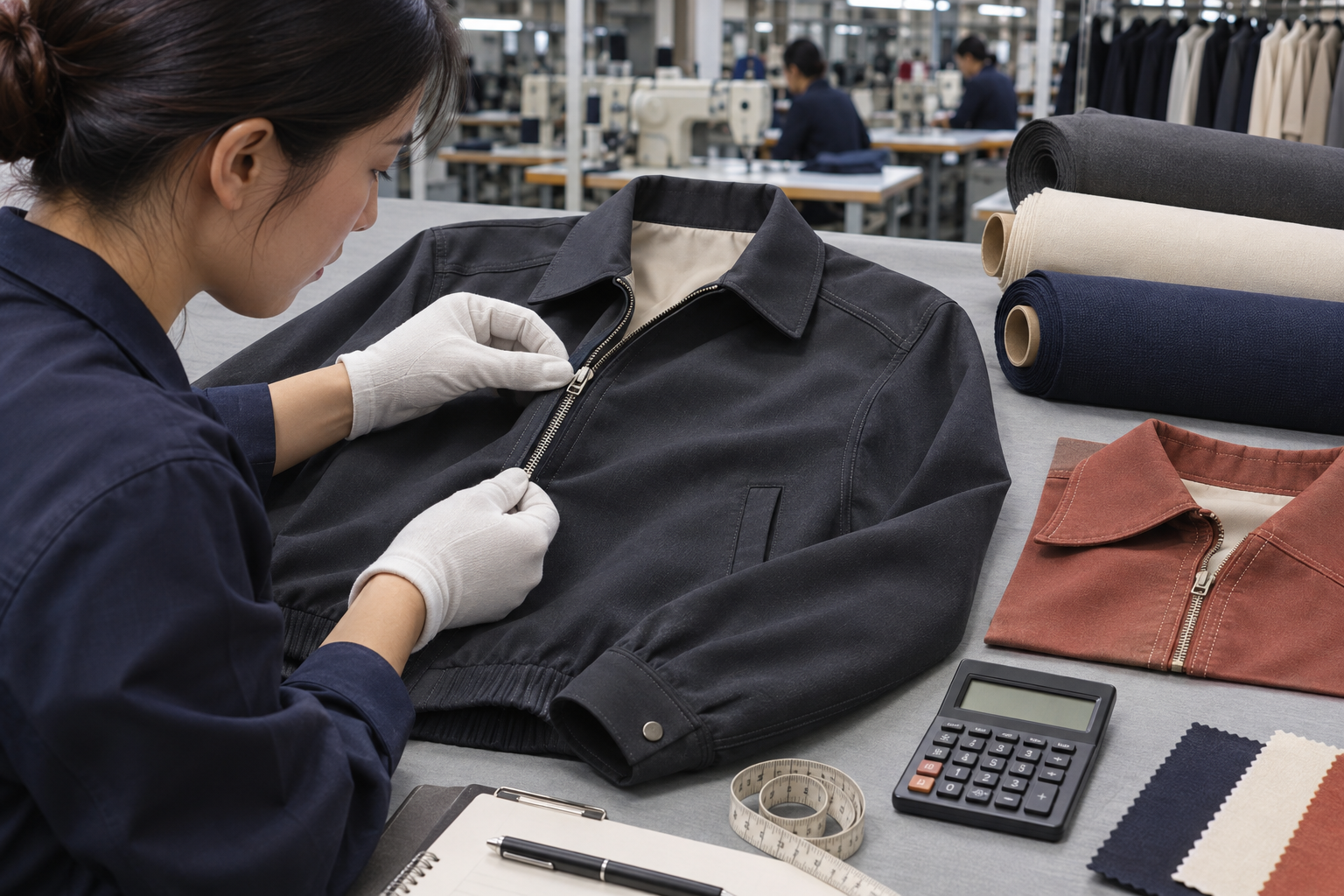
Suppose a cropped jacket's display sample is well received and the team prepares to buy materials. Yet the sample uses substitute fabric, and the actual fabric's drape and post-wash behavior remain unconfirmed. The visual feedback is a valid judgment supporting the visual direction. Extending it to approval of the actual material and bulk manufacturing crosses the boundary of the evidence.
If artwork placement is then fixed from display photographs and size ratios from provisional sizing, multiple unvalidated conditions become linked. Discovering sleeve bunching only after a complete garment is made in the actual material may require changes to prepared artwork and trims, rather than merely another sample.
Break the Risk Chain into Four Intervention Points
Before Committing Quantities, Check That the Product Works
First check whether the target material and structure have been validated together. A swatch feeling right does not mean it will work equally well with a collar stand, placket or ribbing. Changes materially affecting the overall silhouette require a complete garment; local visual changes can first be assessed through partial samples.
Check which sizes and colors the validation covers. A successful base-size fitting does not establish proportions at both ends of the size range. Approval of a representative color does not automatically cover other fabric lots or finishes. A defined coverage scope reveals whether supplementary validation is needed or core conditions remain missing.
Before Purchasing Materials, Check Which Conditions Will Become Irreversible
Custom dyeing, printing or cutting may reduce flexibility. Before ordering, clarify how the swatch relates to regular supply, the change window, leftover-material arrangements and replenishment terms. Restrictions differ by material; do not assume small quantities can always be changed.
If some materials must be purchased for development, limit their purpose and scope, and confirm whether they can later be used in the production order. Do not recast unvalidated bulk requirements as development needs simply to make the schedule look smooth.
Before Subcontracting and Scheduling, Check Process Dependencies
Artwork placement depends on panel or garment dimensions, washing may affect subsequent assembly, and special trims may constrain the construction sequence. Ask the relevant parties to explain the actual process route to identify decisions that would invalidate earlier work if changed.
For decoration crossing a seam, confirm joining and positioning first; decoration on an independent patch offers different flexibility. Both may be called ‘printing first’, yet have different dependencies. Discussing specific locations and operation sequences prevents omissions more effectively than broadly demanding advance approval of every process.
Before Shipping, Check Whether Corrective Work Solved the Original Problem
Completed rework does not automatically mean approval. Recheck the original issue, the products treated and any effects on neighboring areas. After relocating a pocket, for example, inspect needle holes, color marks and surrounding fabric as well as placement. After repressing, check whether appearance holds when the garment rests naturally.
For a batch-related issue, inspecting one representative repaired sample is insufficient. Set reinspection coverage according to the identified extent and agreed method, retaining traceable results. The aim is to verify actual products, not merely obtain an attractive corrective-action photograph.
When an Issue Appears, Contain Its Spread Before Comparing Remedies
First identify the affected scope: a material lot, one color, a particular operation or the entire style. Separate affected goods from unaffected goods and retain samples and original records. Even before the extent is clear, avoid mixed packing or further processing that makes traceability difficult.
Second, compare feasible options. Rework may preserve the design but requires validation of its effects. Replacement material may improve the issue but requires renewed assessment of wear and color. Design changes may ease manufacturing but alter features already presented. Every option has a cost; meeting the original date cannot be the sole criterion.
Third, check whether the revised product still matches external descriptions. If display materials, labels or order descriptions no longer match, update them too. Solving a production issue does not automatically correct sales information.
Frequently Missed Elements in Cost Comparisons
Separate costs into those already incurred, further investment and downstream effects. Continuing production does not automatically recover past work. Further investment should specify the improvement obtained. Downstream effects include delays, repeat shipping, repacking and potential after-sales handling. Use actual quotations and records for amounts, rather than applying an article's examples.
Also consider the consequences of doing nothing. Remaking goods may offer no practical benefit for a natural visual variation already accepted by both parties. If normal wear or key functions are affected, a sales explanation or discount may not solve it. Establish the nature of the problem before discussing financial remedies to reduce further investment driven by sunk costs.
Replace an Ever-Longer Checklist with One Release Principle
Ask: ‘If the next step had to be undone, which unvalidated condition would most likely cause it?’ Make that condition central to the current review and identify the minimum validation that is sufficiently effective. This may be a sample in actual materials, a set of combination panels or a fitting under defined conditions.
This principle does not guarantee the elimination of all risks, but it can keep investment aligned with evidence. When materials, structure or execution conditions change, asking the question again is more useful than copying the last order's approval record.
Even in an emergency, define the limits of temporary measures. Pausing cutting for one batch pending assessment differs from canceling an order because the style is unworkable. State what is paused, the evidence available and the conditions for reassessment to preserve options and reduce continued execution caused by different interpretations.
If an issue clearly affects only one color, whether other colors may continue depends on shared materials and processes. If the cause remains unknown and the same symptom has merely not been observed, keep the judgment open. Recording ‘not currently observed’ as ‘confirmed unaffected’ again extends commitments beyond the evidence.
Afterward, retain the decision that actually allowed the issue to spread: why continuing seemed justified, what information could have been obtained earlier and what check could have detected it in time. Review should change the next decision, rather than repeat ‘improve communication’.