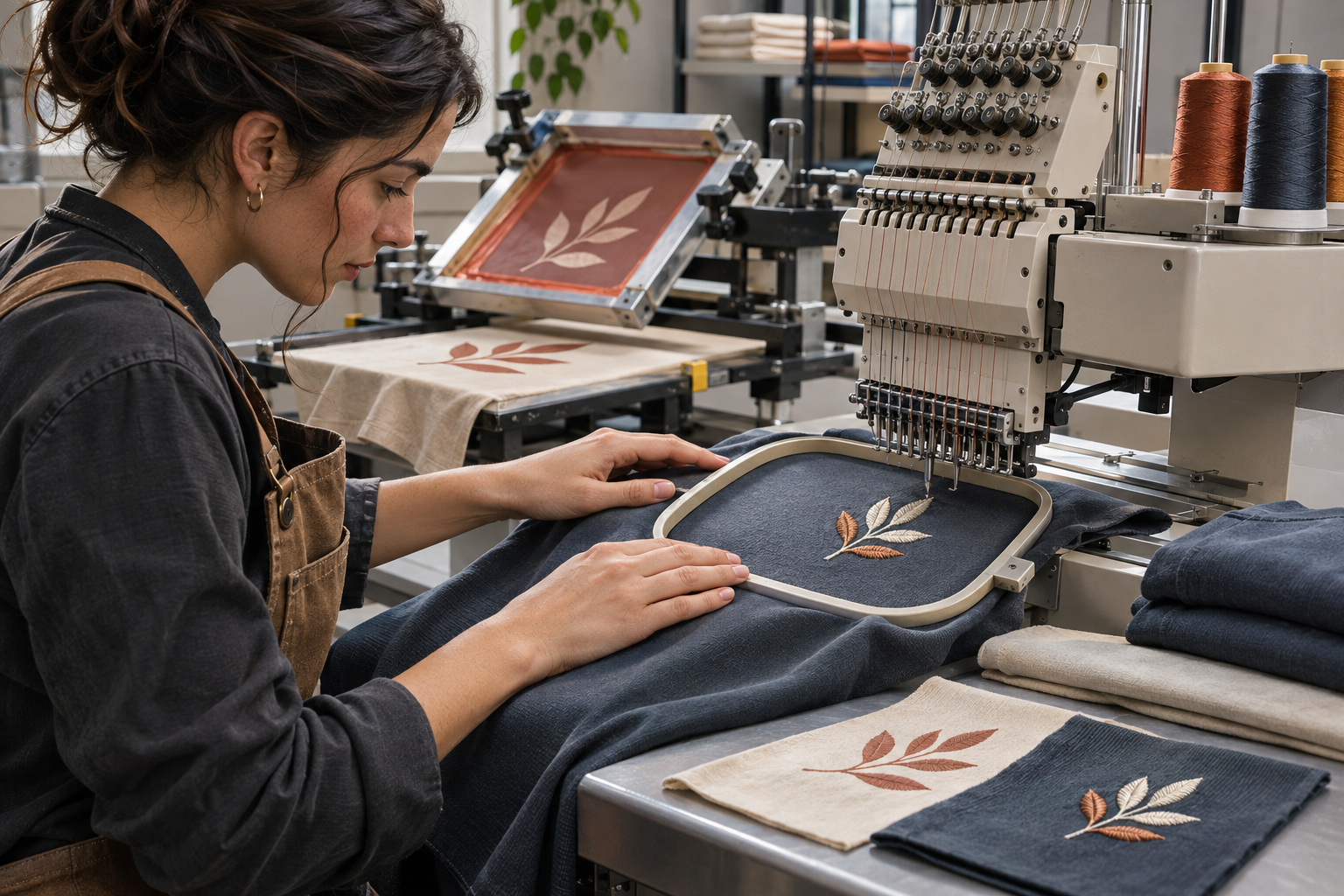
Embroidery and Print Sample Checklist Launched
The new checklist covers placement, color, hand feel and wash fastness, helping brands establish process standards before bulk production.
Start Sample Checks by Defining the Intended Effect
This site previously announced an embroidery and print sample checklist covering placement, color, hand feel and post-wash behavior to organize process requirements before bulk production. Samples connect artwork files with actual base fabrics and production methods; the checklist helps turn observations into clear feedback.
Priorities vary by style. A next-to-skin top may prioritize skin contact, while a small chest motif on an outerwear piece may prioritize placement and outline. State the intended effect before review so acceptance or revision has a shared basis.
Why Check Both Sides of the Same Design?
The front shows outline, color, coverage and placement; the reverse helps assess contact feel, backing treatment and local thickness. Check embroidery alongside the base fabric for pulling or puckering. Touch and fold printed samples to assess whether print and fabric deliver the expected hand feel.
Compare options on the same or explicitly comparable base fabrics where possible. Changing base fabric, color and process together makes it difficult to identify the cause of an effect. Link sample codes to artwork files and production conditions so an attractive photograph does not become the only remaining record, without a basis for further manufacturing.
Anchor Placement Comments to Identifiable References
‘A little higher’ may work in discussion, but written revisions still need a reference. Mark the direction relative to the garment centerline, neckline, pocket or seam. Where a sample shows only a detail, also review the artwork on a whole garment against fit, size and wearing conditions.
Three Possible Review Outcomes
First, the result meets this round's objective: retain the sample and proceed. Second, the direction works but needs revision, such as simplifying details, repositioning the design or improving local hand feel. Third, the current process and base fabric are incompatible and manufacturing options need comparison again.
Record care conditions and observations for post-wash changes. Development sample observations cannot directly replace formal testing, and wash durability or other performance claims should not precede appropriate validation. If artwork, base fabric or production conditions change, reassess whether earlier conclusions still apply.
Clearly recording the question each review should resolve matters more than ticking every box. The final result is approval documentation linking the style, artwork and physical effect for later garment review.